
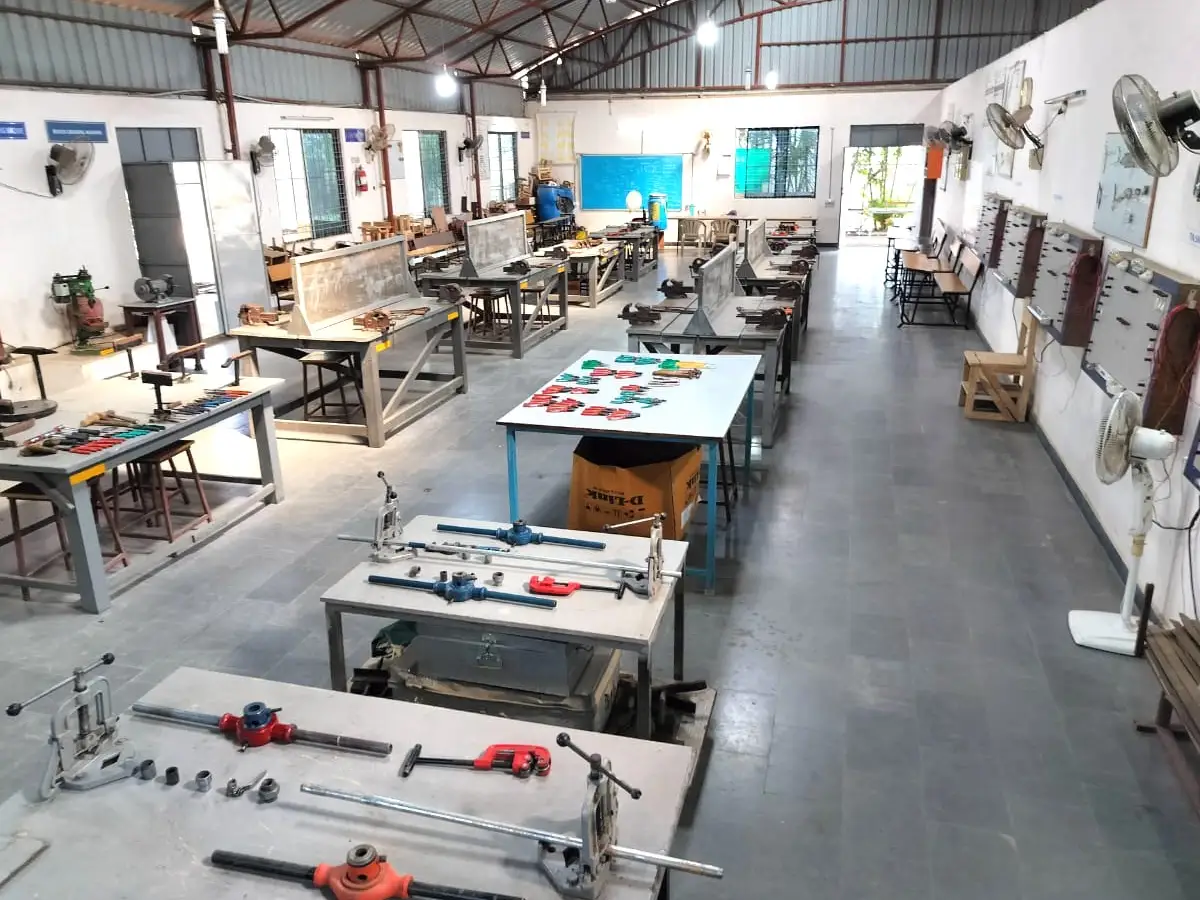
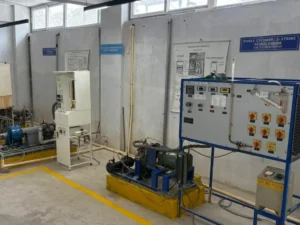
The Thermal Engineering Laboratory is designed to provide practical exposure to the principles of thermodynamics, heat transfer and energy systems. The facility supports academic courses, research activities, and project development related to engines, cooling systems, and sustainable energy technologies.
Major Equipment Available
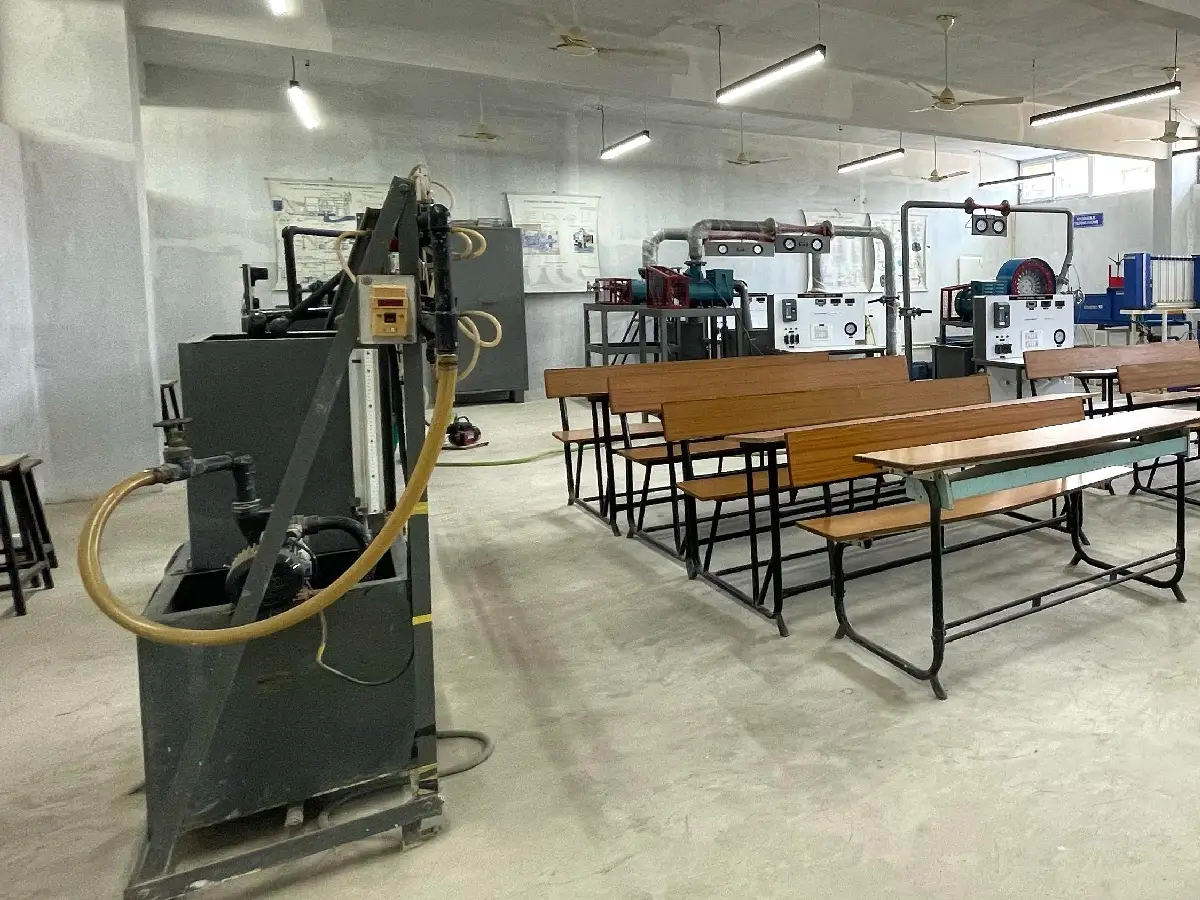
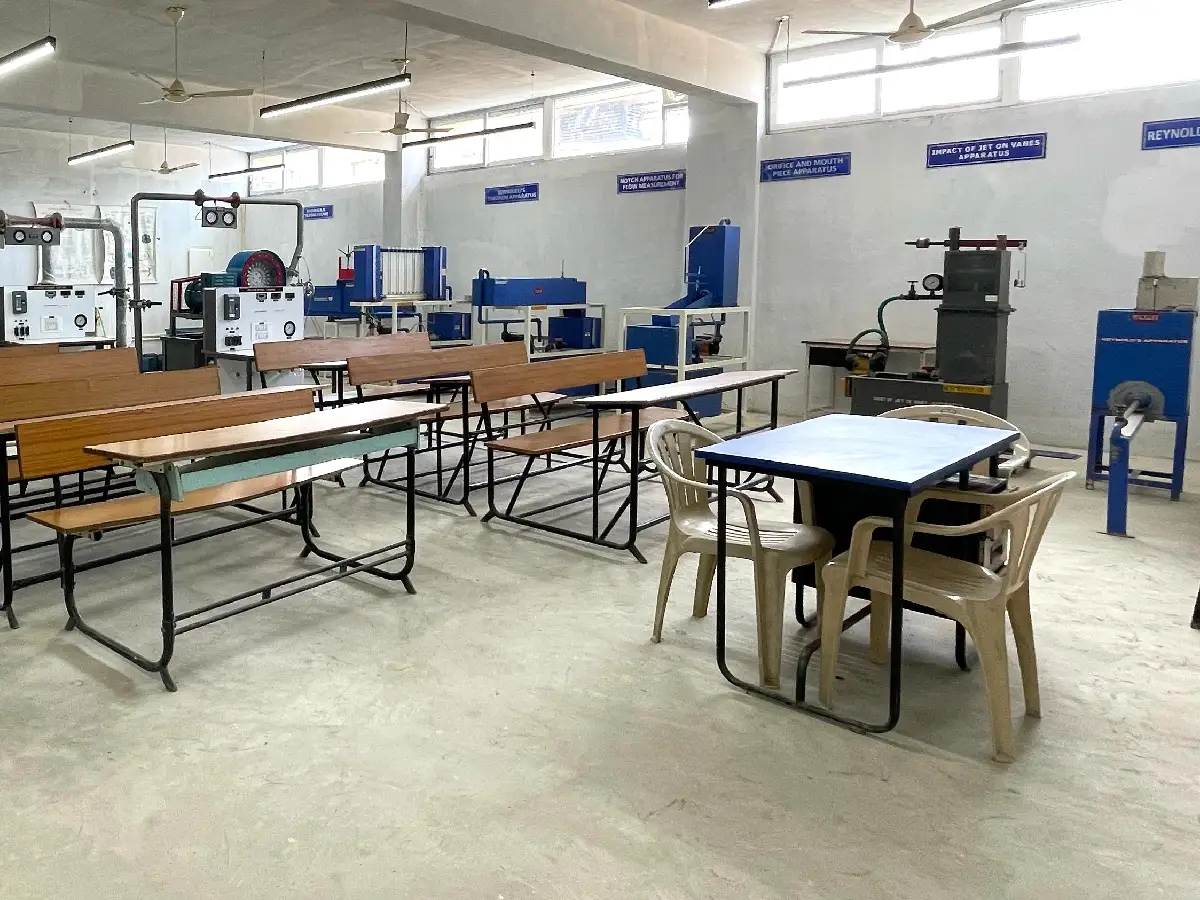
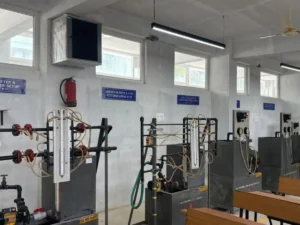 The lab enables students to understand fluid flow phenomena, pressure measurement, energy losses, and pump and turbine operations through real-time experimental setups. It bridges theoretical fluid mechanics concepts with engineering applications in water resources, power generation, and industrial fluid systems.
Major Equipment Available
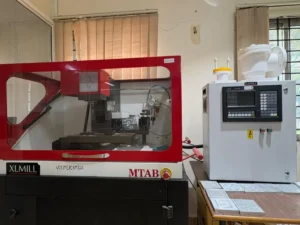 The lab enables students to understand the integration of design, manufacturing, material handling, and control systems through automated production setups and robotic arm. It bridges the gap between conventional manufacturing and Industry 4.0 technologies.
Major Equipment Available
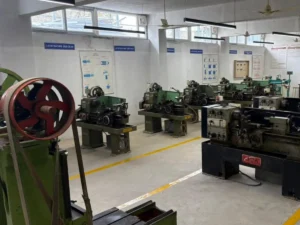 The lab enables students to understand the principles of accuracy, tolerances, surface finish, and quality control while developing hands-on skills in machining and manufacturing processes. It integrates measurement science with machine tool practice to ensure reliable product design and production.
Major Equipment Available
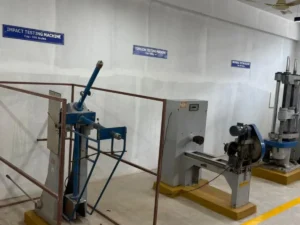
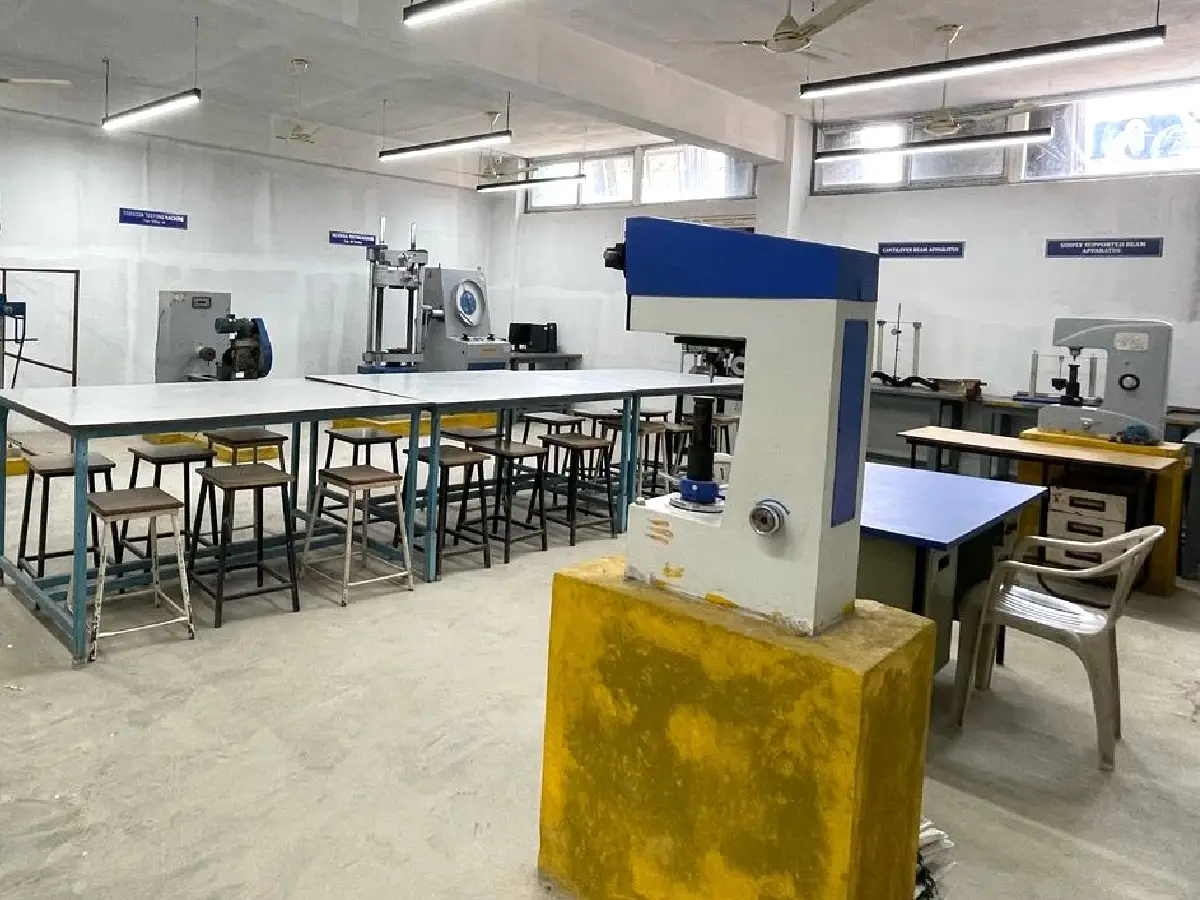
The Mechanics of Solids Laboratory provides practical exposure to the behavior of materials under different types of loads such as tension, compression, bending, torsion, and impact. The lab helps students understand stress–strain relationships, deformation characteristics, and failure mechanisms through hands-on experimentation.
Major Equipment Available
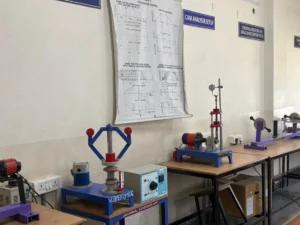 The Dynamics of Machines Laboratory provides practical understanding of the behavior of mechanisms and machines under motion. The lab enables students to study forces, balancing, vibrations, governors, and control mechanisms through experimental analysis and real-time demonstrations. It helps bridge theoretical dynamics concepts with mechanical system performance, stability, and efficiency.
Major Equipment Available
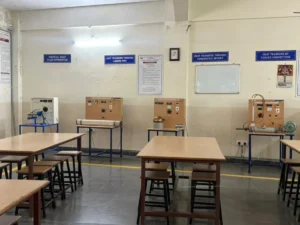
The Heat Transfer Laboratory provides practical exposure to the fundamental modes of heat transfer—conduction, convection, and radiation. The lab enables students to experimentally determine thermal properties, heat transfer coefficients, and temperature distributions using modern instrumentation and controlled setups. It strengthens conceptual understanding by correlating theoretical analysis with real-time measurements and performance evaluation.
Major Equipment Available
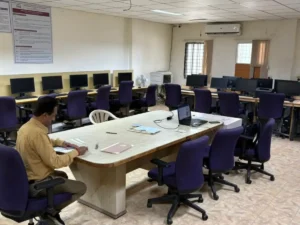
The Numerical Simulation Laboratory provides a high-performance computational environment for modeling, analysis, and virtual testing of mechanical engineering systems. The lab enables students and researchers to simulate real-world engineering problems using advanced numerical methods, reducing the need for physical prototypes and accelerating product development. It supports design validation, optimization, and performance prediction through Computer-Aided Engineering (CAE) tools.
Major Equipment Available