
Accredited by the National Board of Accreditation (NBA) under Tier-I
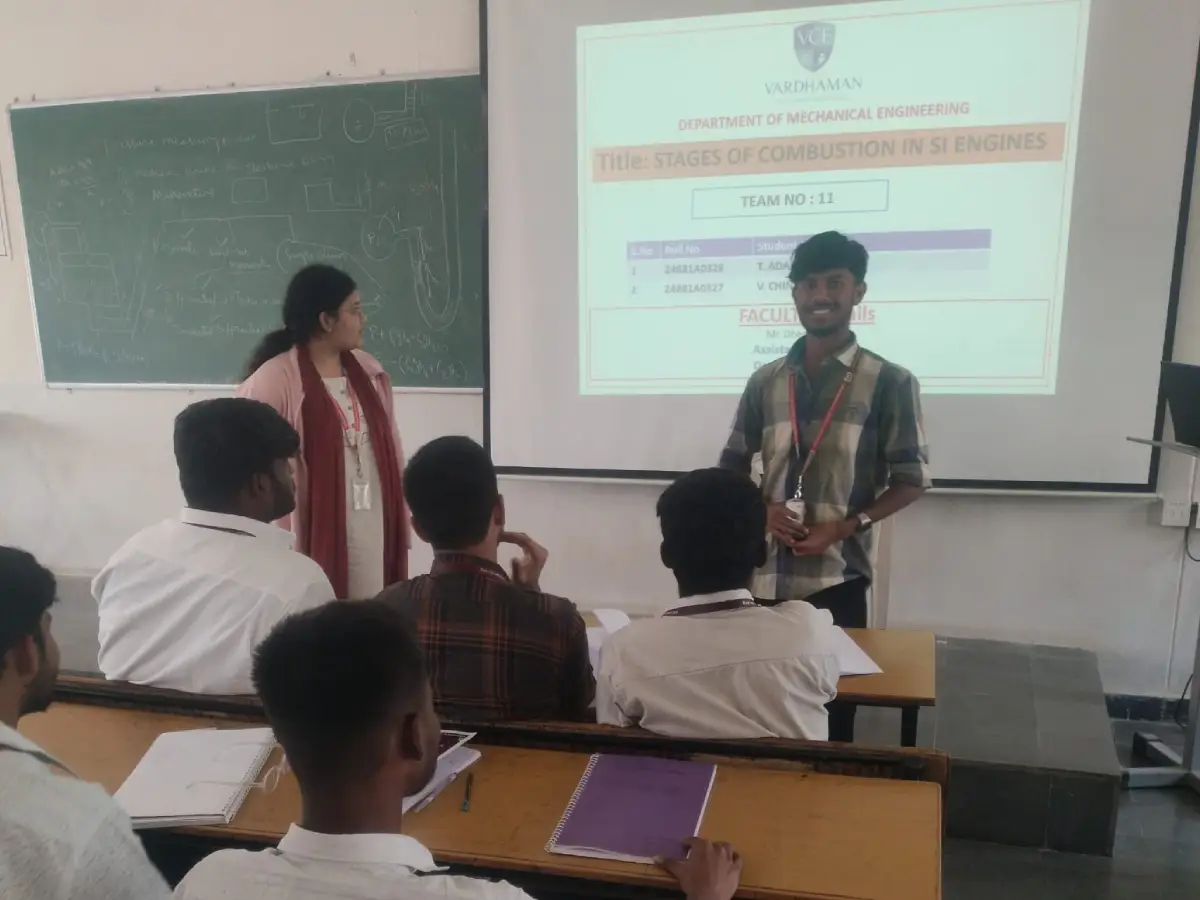
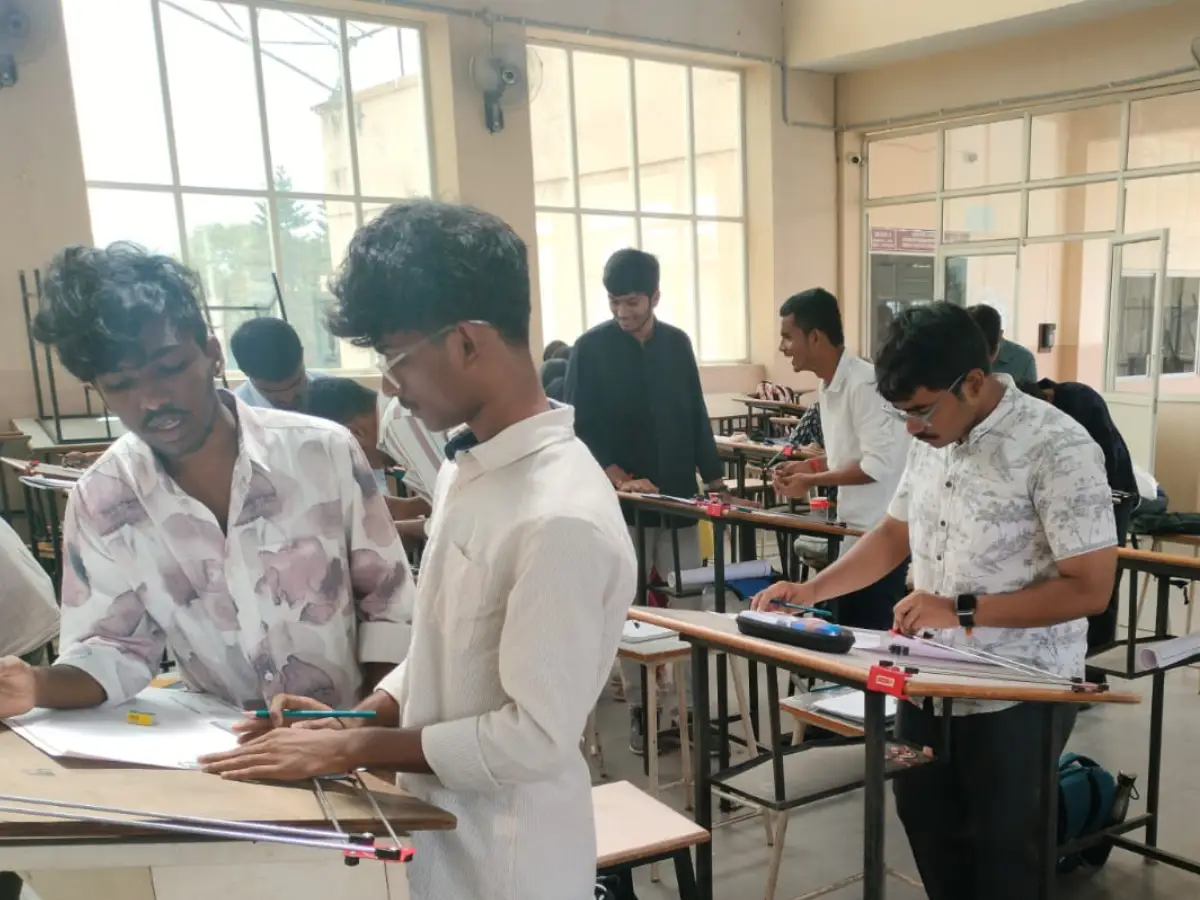
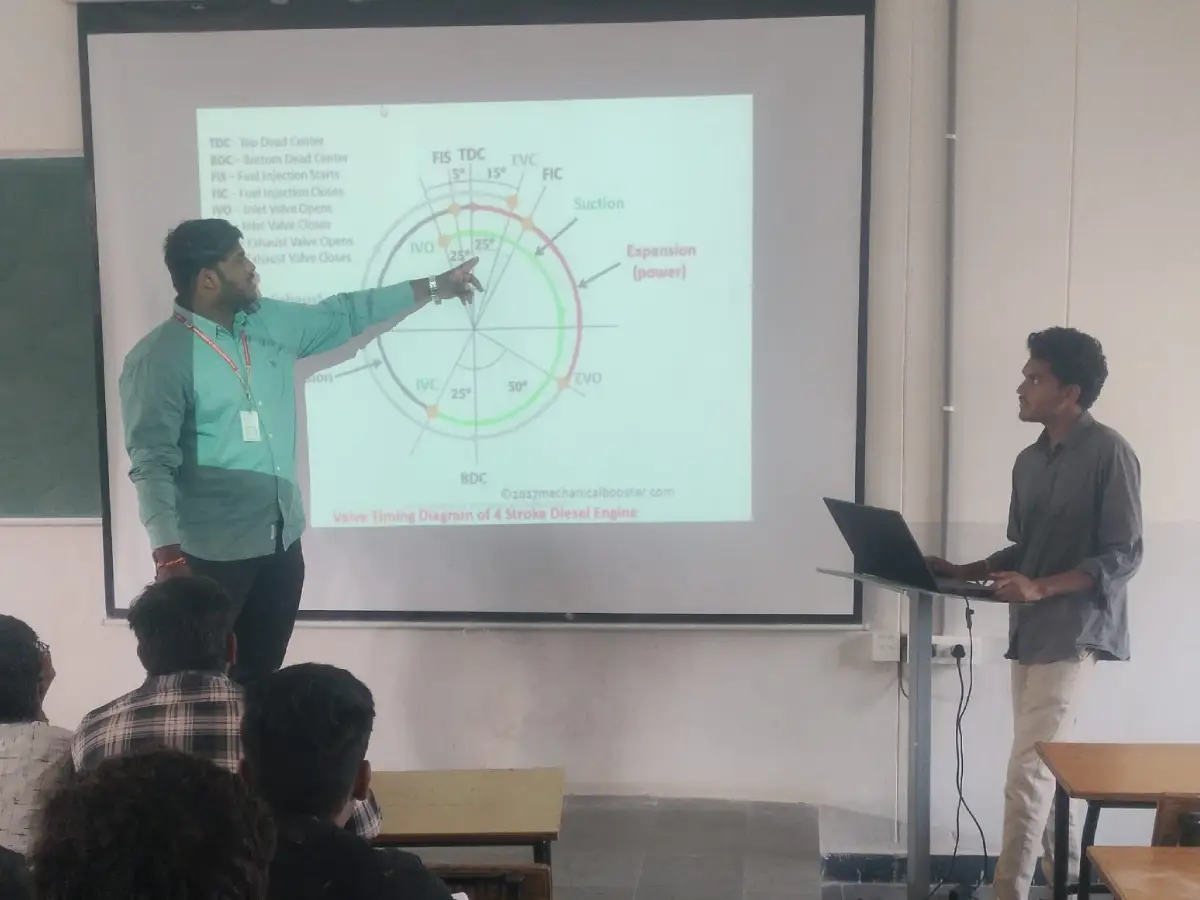
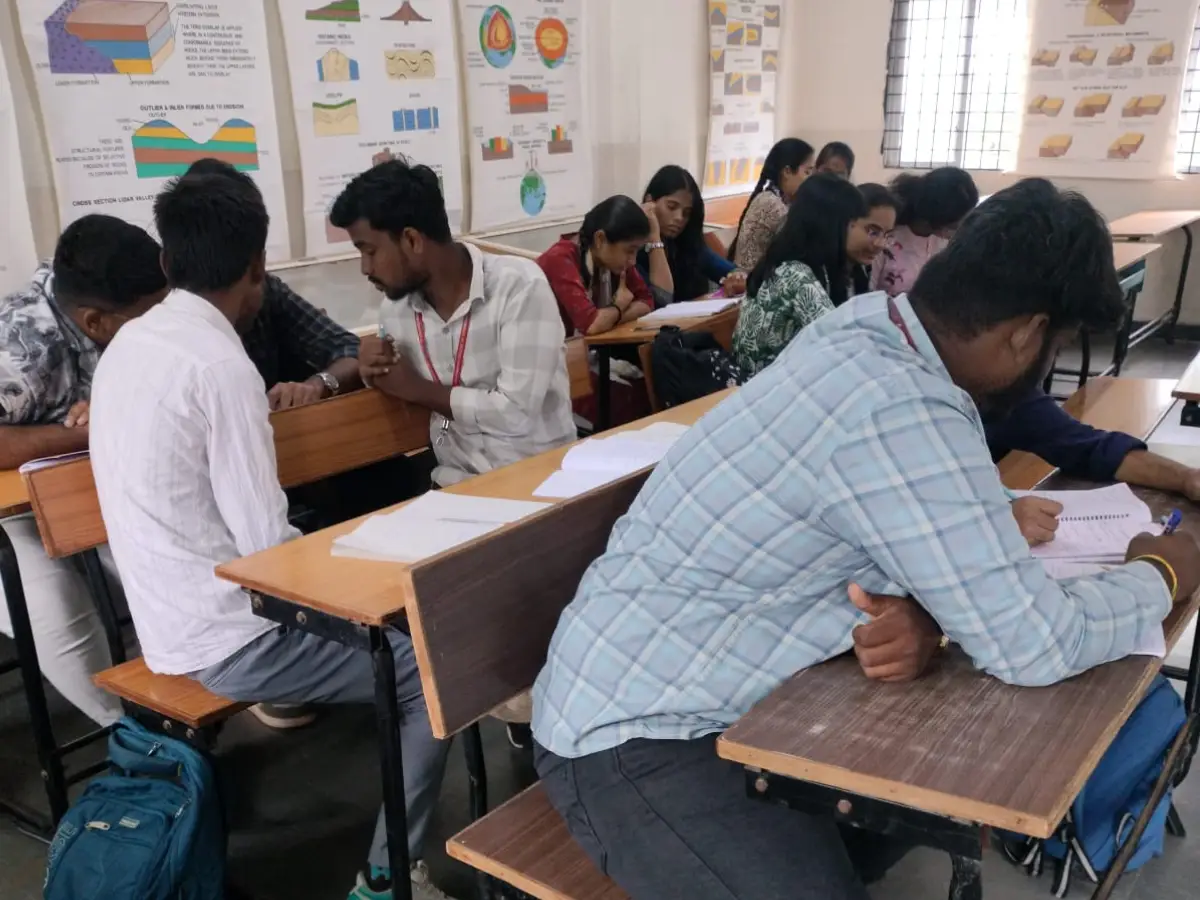
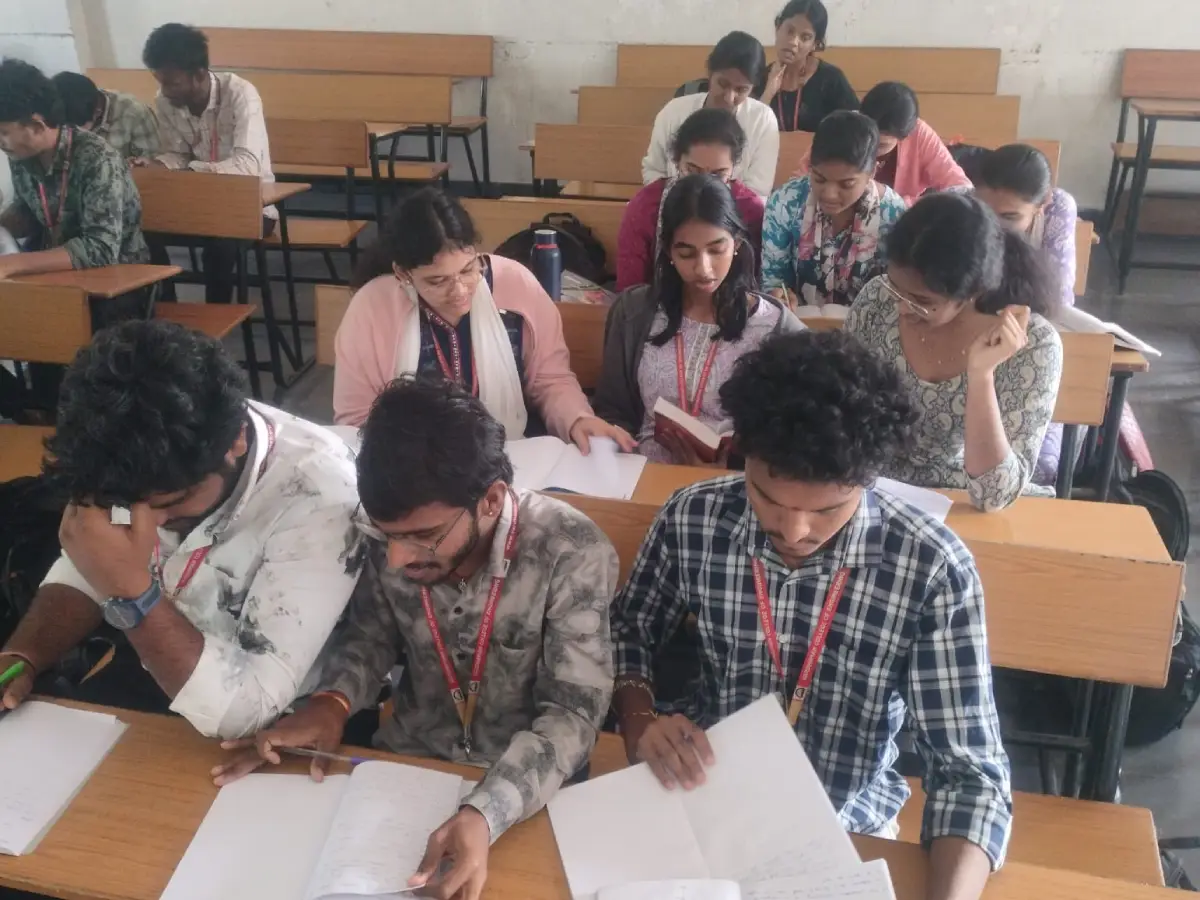
The Department of Mechanical Engineering adopts a learner-centric pedagogical framework that empowers students to actively participate in their academic journey. The teaching–learning ecosystem integrates theory with hands-on practice through laboratories, design activities, workshops, and real-time problem solving. Students are encouraged to explore, question, design, and innovate, thereby strengthening analytical thinking, technical competence, and professional confidence. Continuous mentoring, collaborative engagement, and personalized academic support ensure that every learner progresses effectively and achieves holistic development.
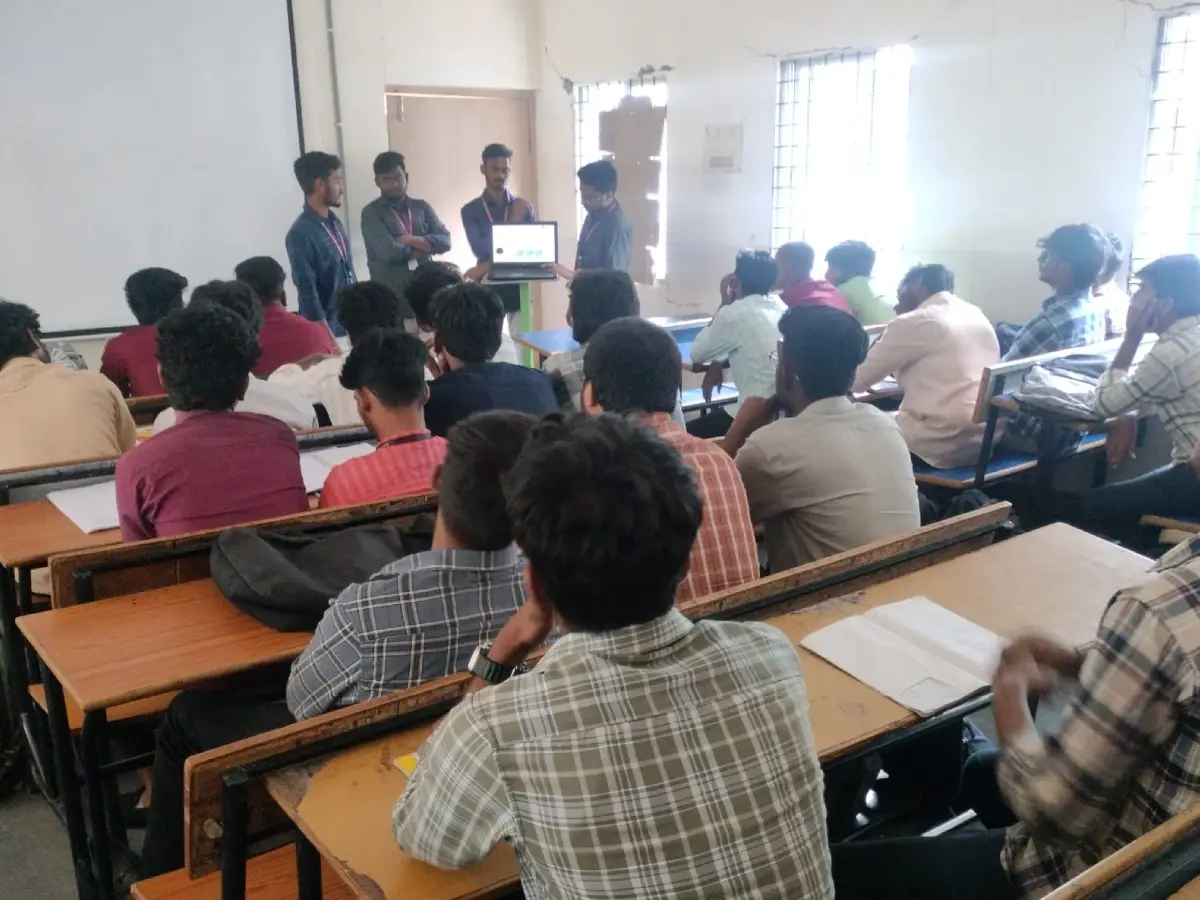
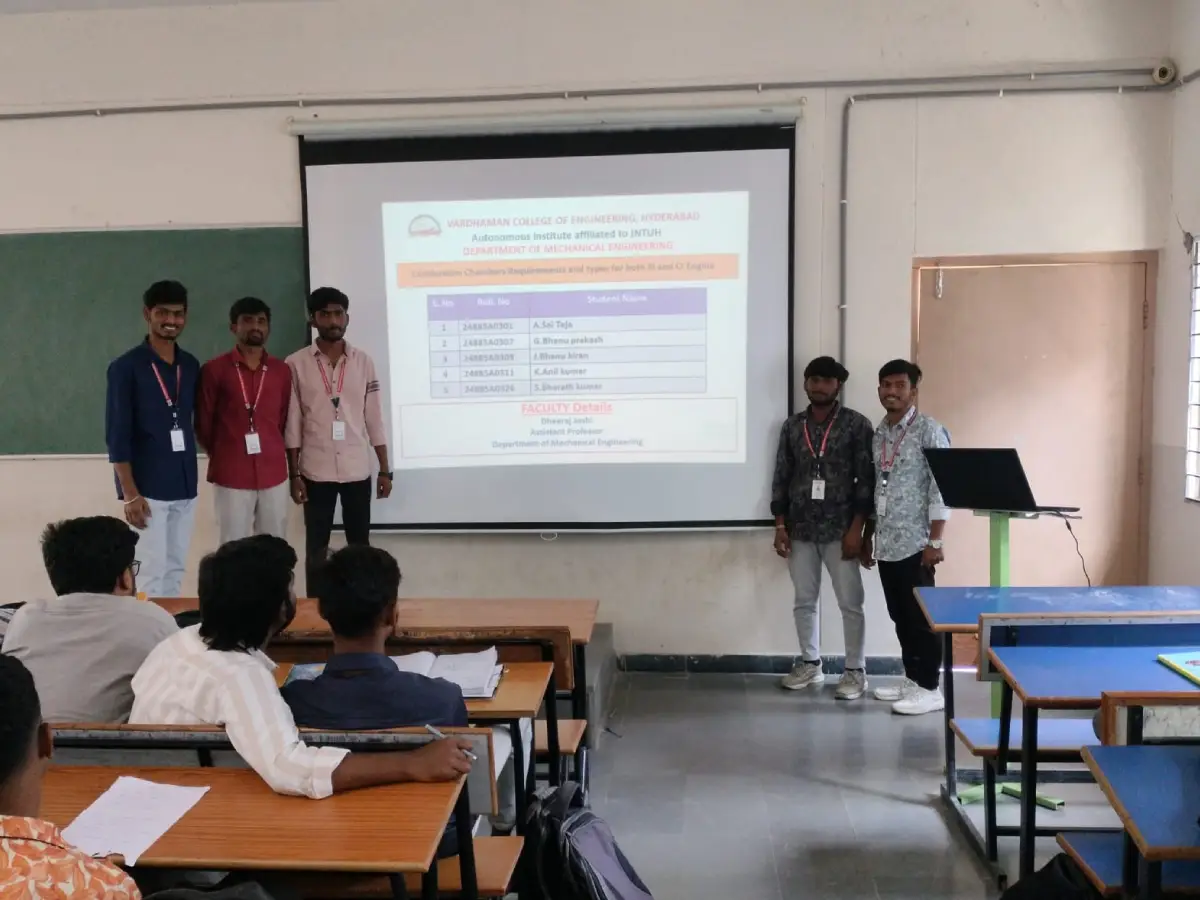
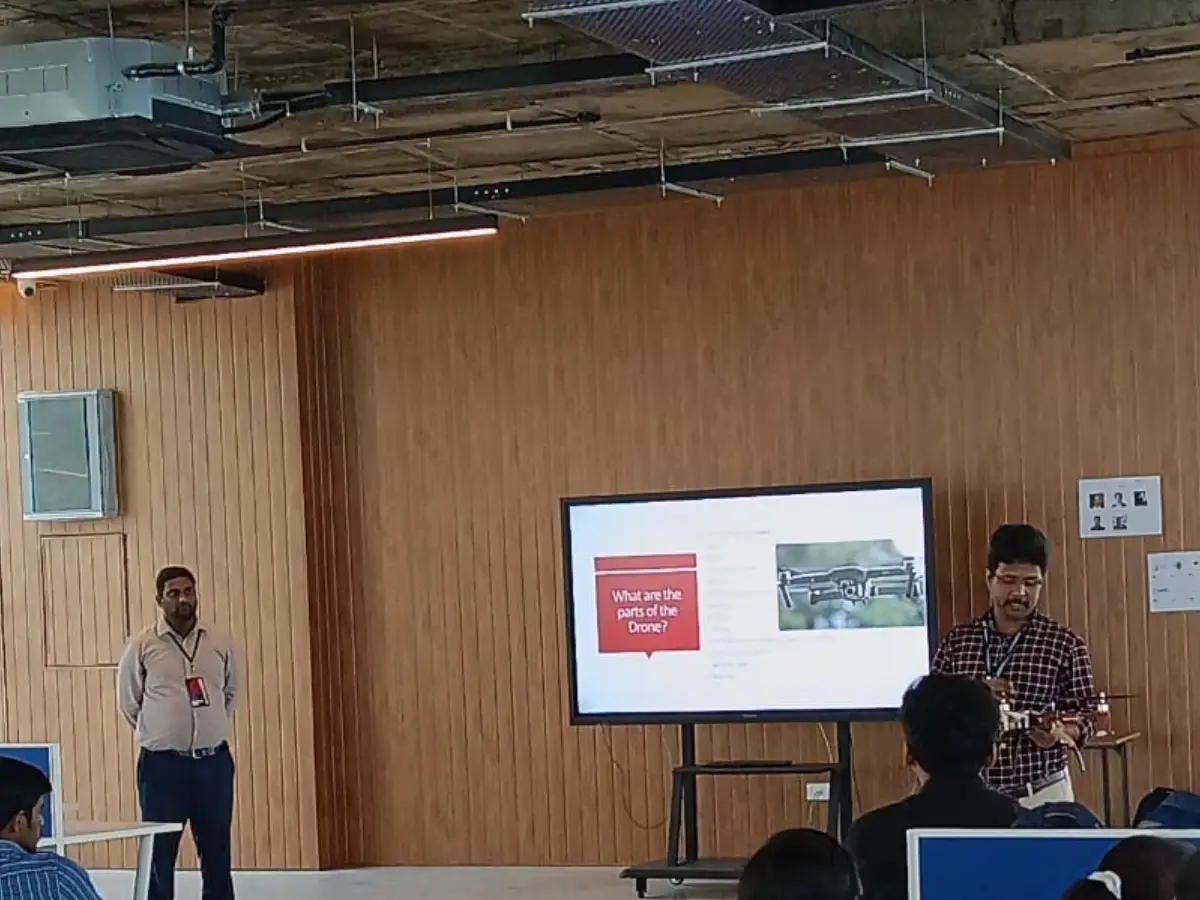
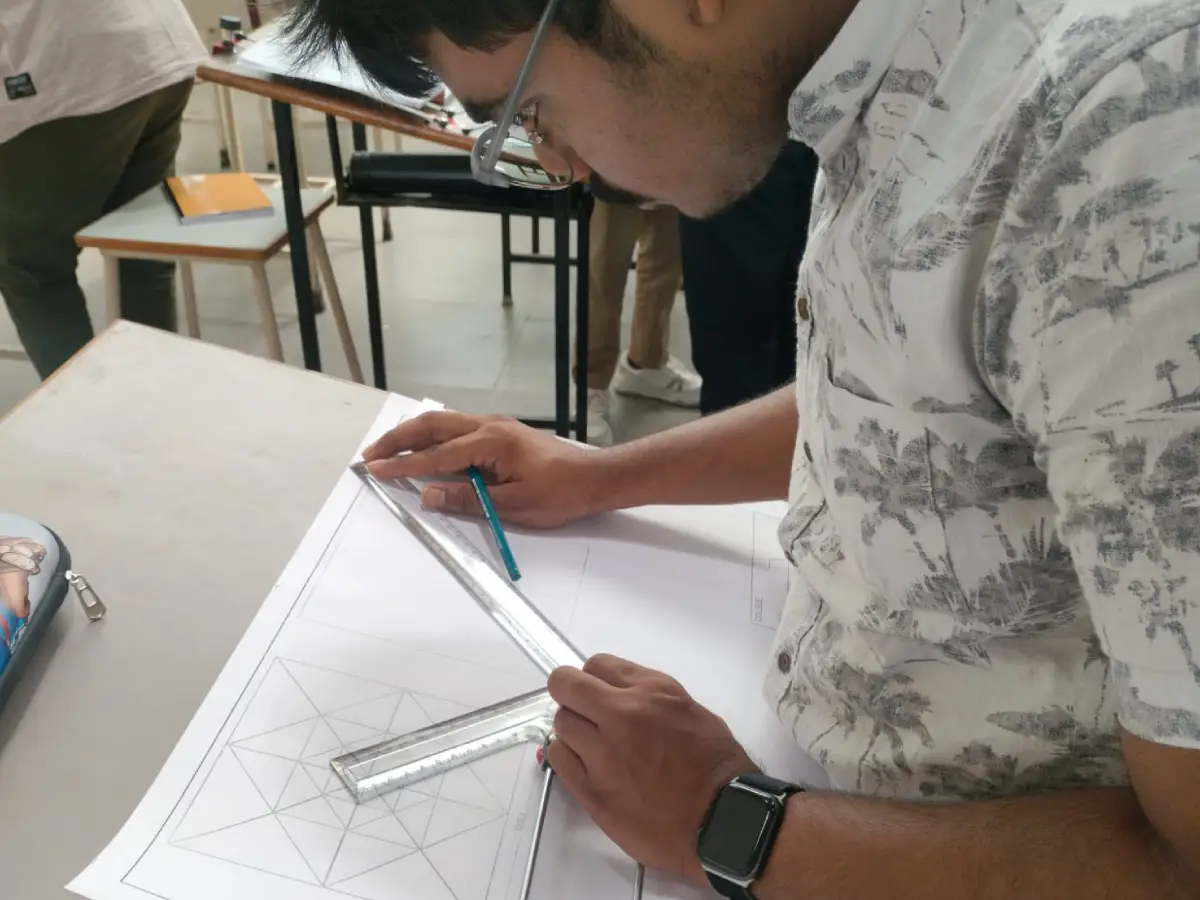
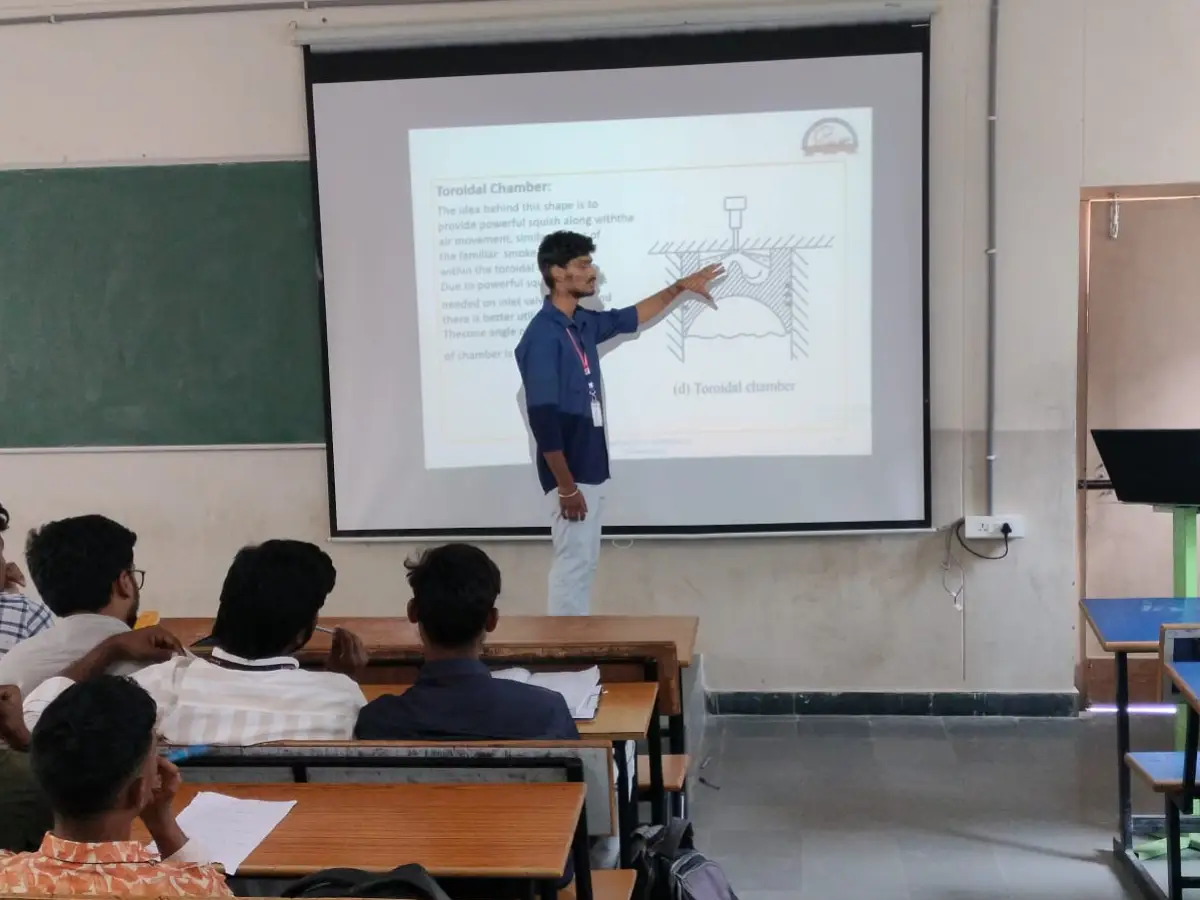
The Department of Mechanical Engineering follows a systematic and learner-focused teaching–learning process that emphasizes student-centered education, outcome-based learning, and practical skill enhancement. The department integrates theoretical foundations with experiential learning to strengthen analytical ability, design competence, and problem-solving skills. Students are encouraged to actively participate through interactive classrooms, laboratory experiments, workshops, and real-time engineering applications to ensure deeper conceptual understanding and academic excellence.
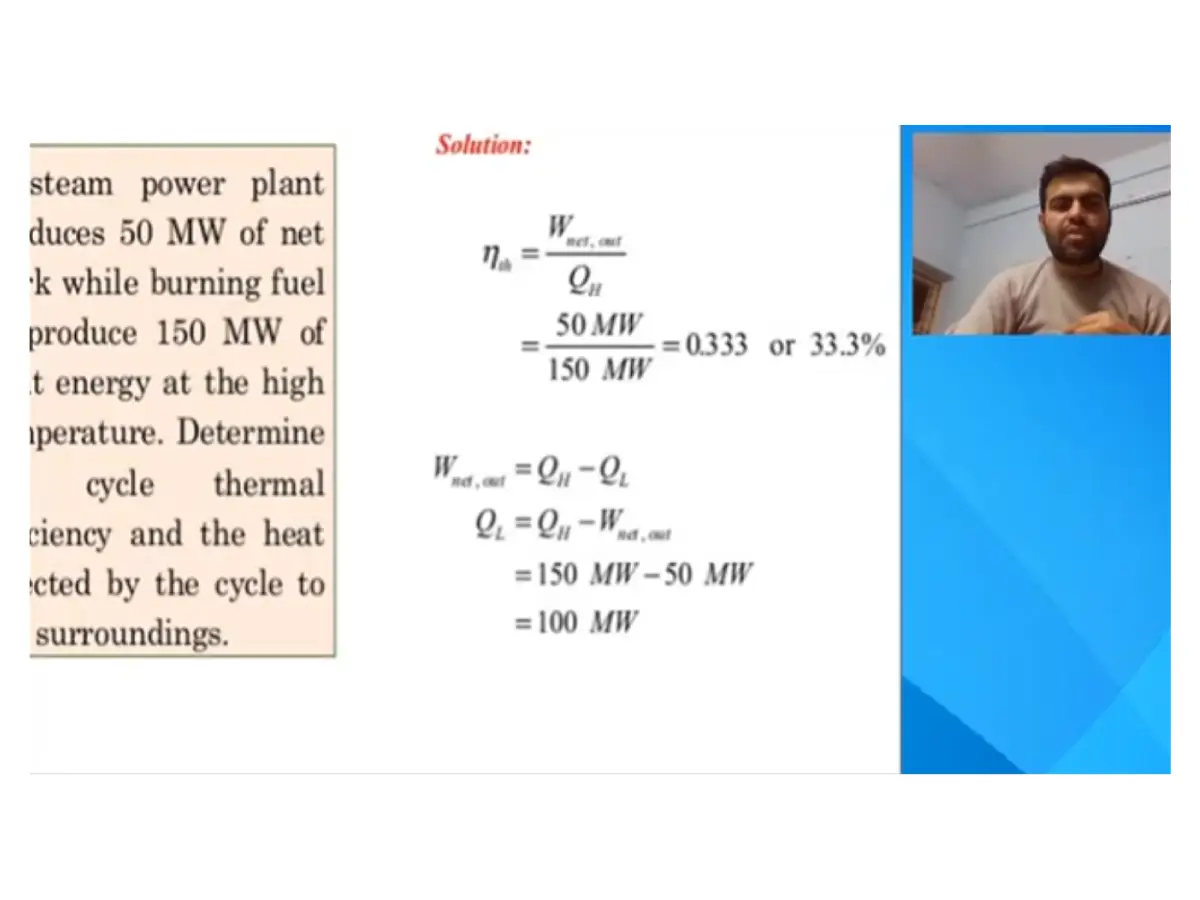
The teaching–learning framework incorporates innovative pedagogical methods such as project-based learning, case studies, simulations, industry-oriented training, and digital learning platforms. Outcome-Based Education (OBE), value-added certification courses, internships, and research activities are embedded into the curriculum to enhance technical expertise, professional competencies, teamwork, and lifelong learning habits. These initiatives collectively prepare students to meet evolving industrial demands and contribute effectively to societal and sustainable engineering challenges.
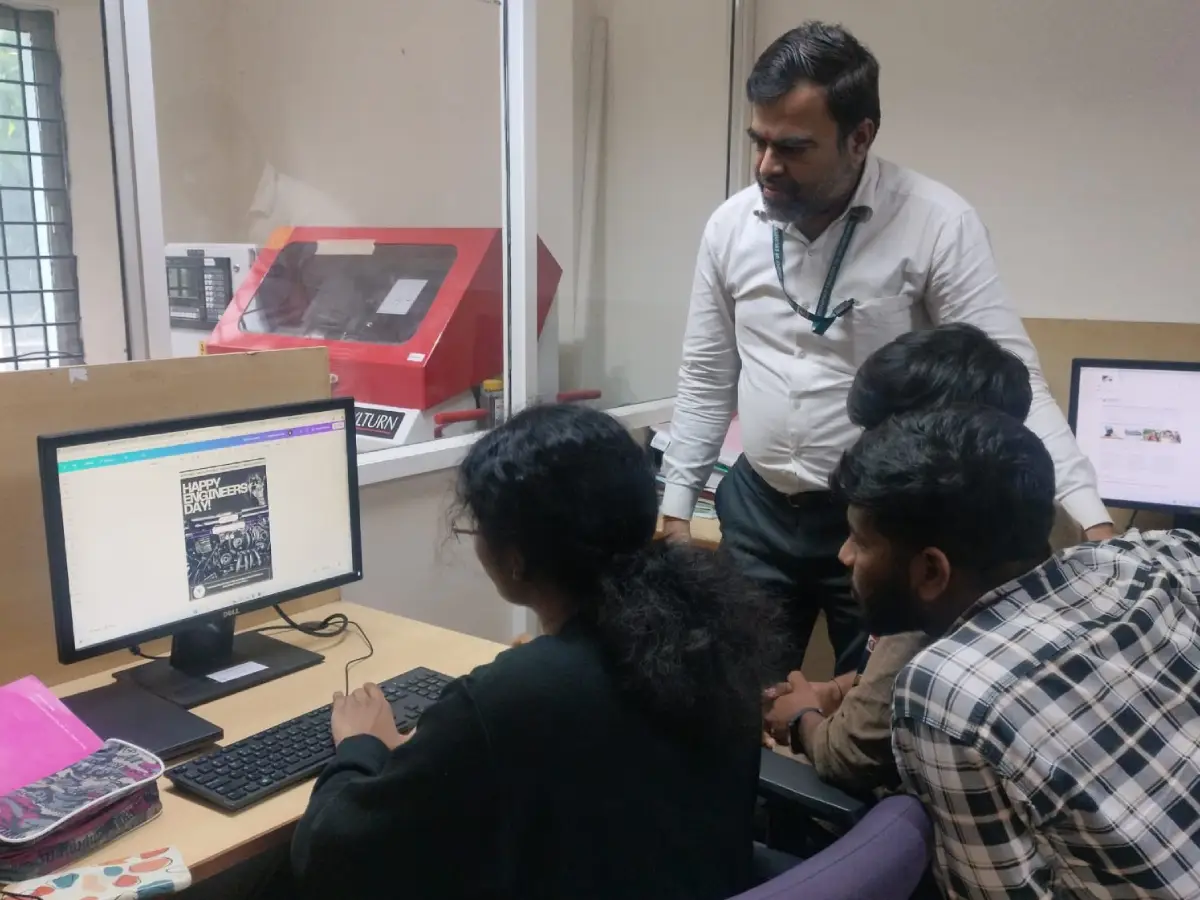
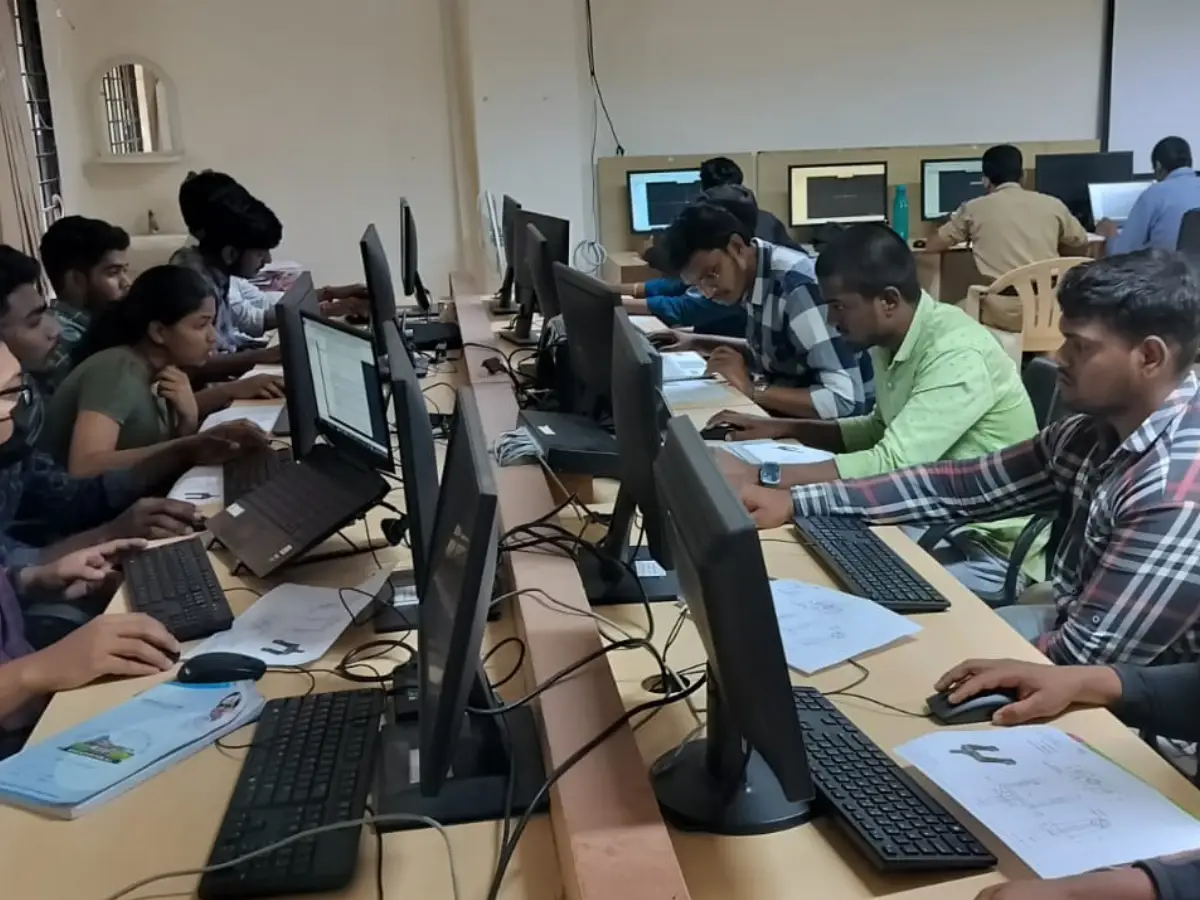
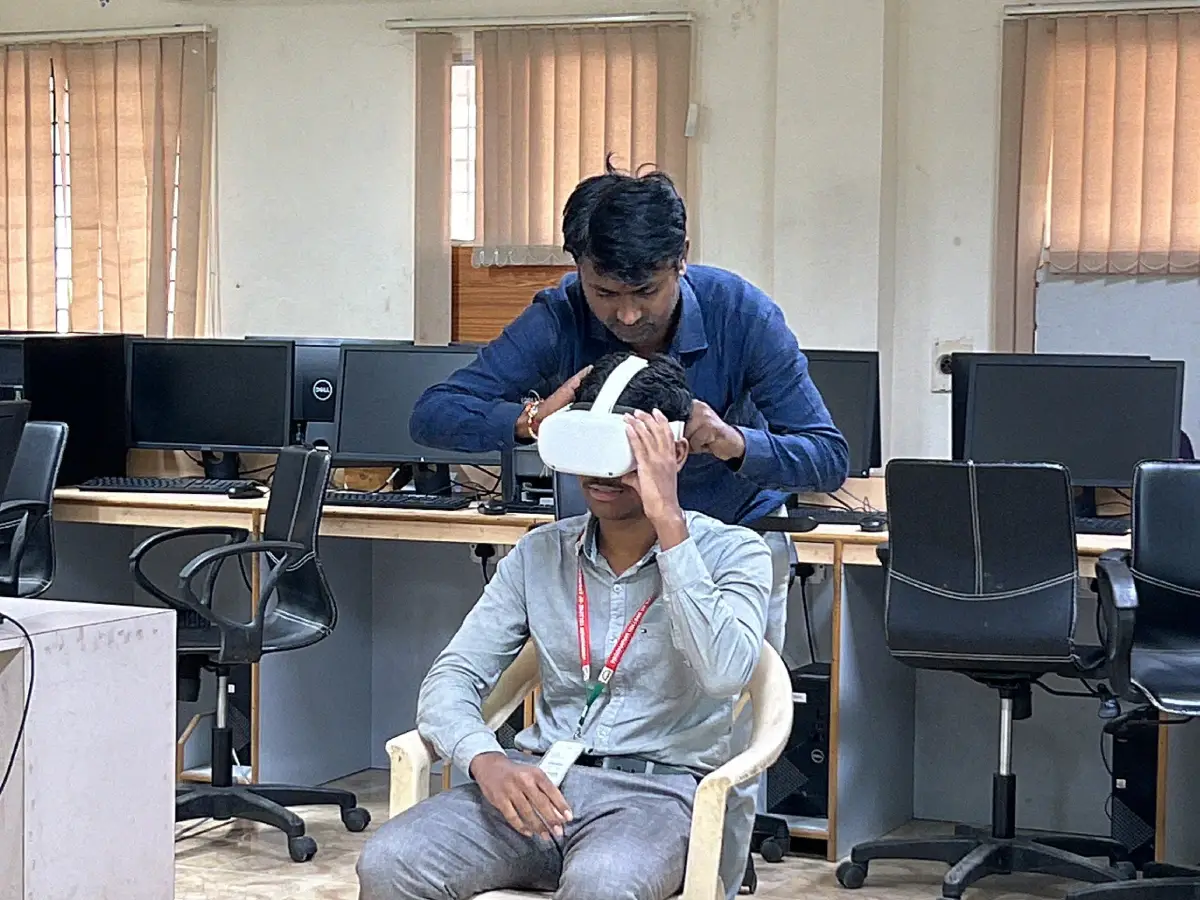
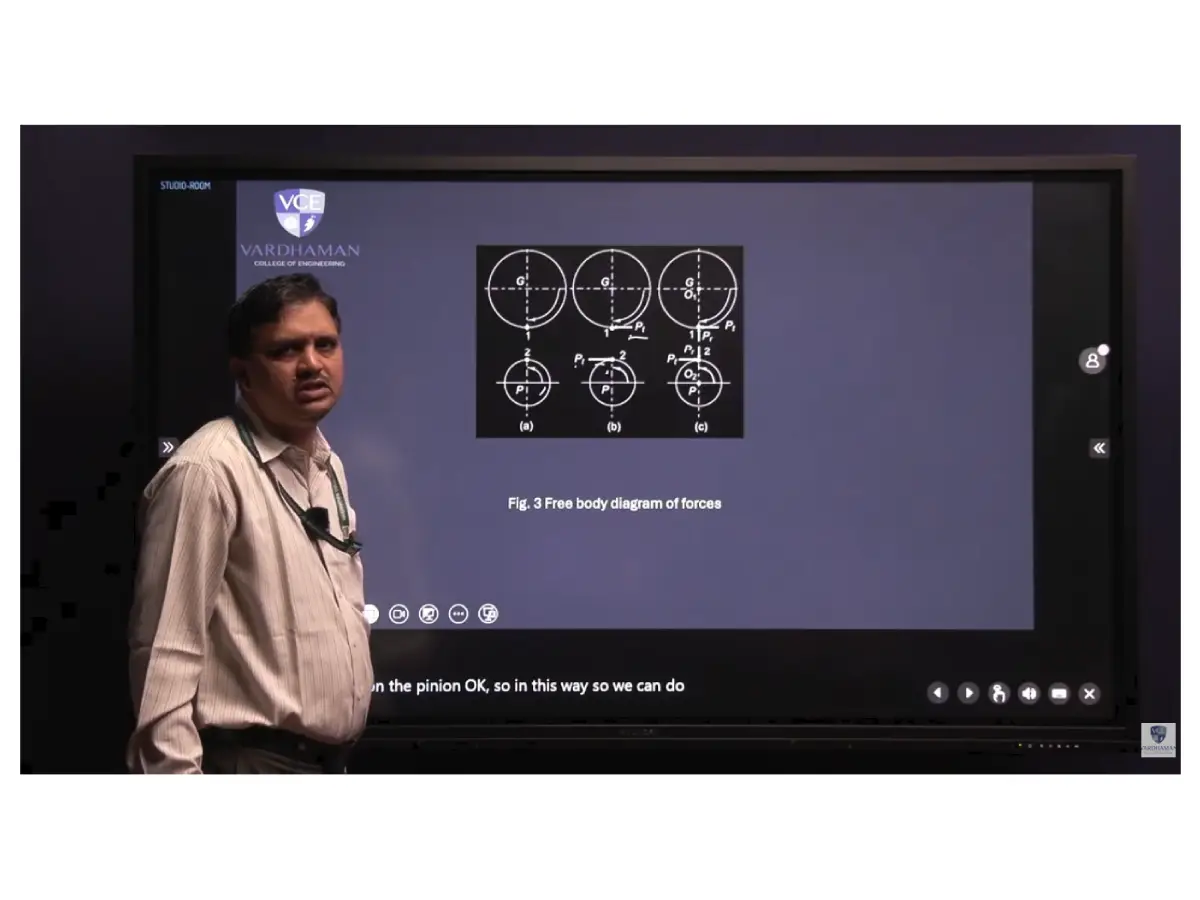
The Department of Mechanical Engineering adopts progressive and practice-oriented teaching methodologies to enhance technical competency, creativity, and problem-solving ability among students. Modern pedagogical strategies, digital technologies, and experiential learning tools are seamlessly integrated with classroom instruction to bridge the gap between theory and real-world engineering practice. These approaches promote active participation, deeper conceptual understanding, and application-based learning aligned with industry requirements.
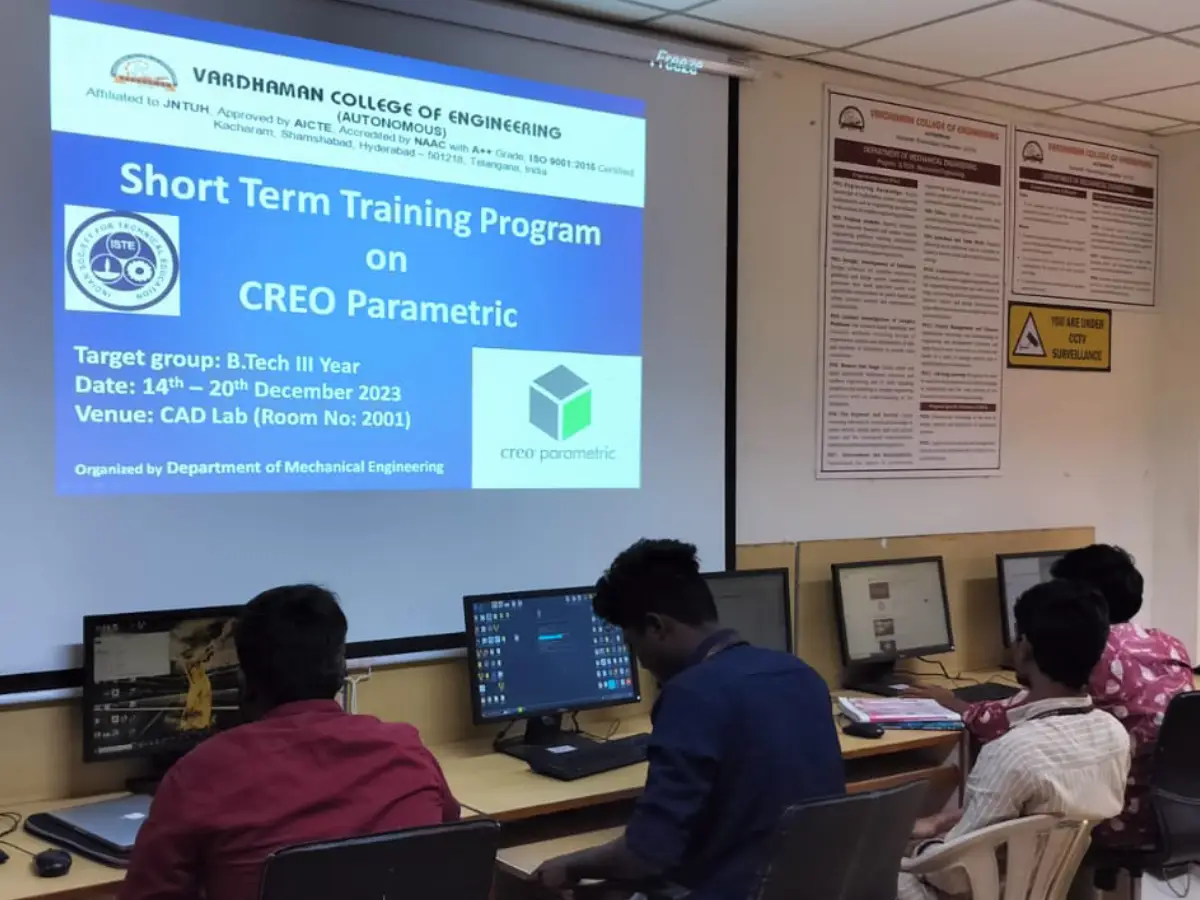
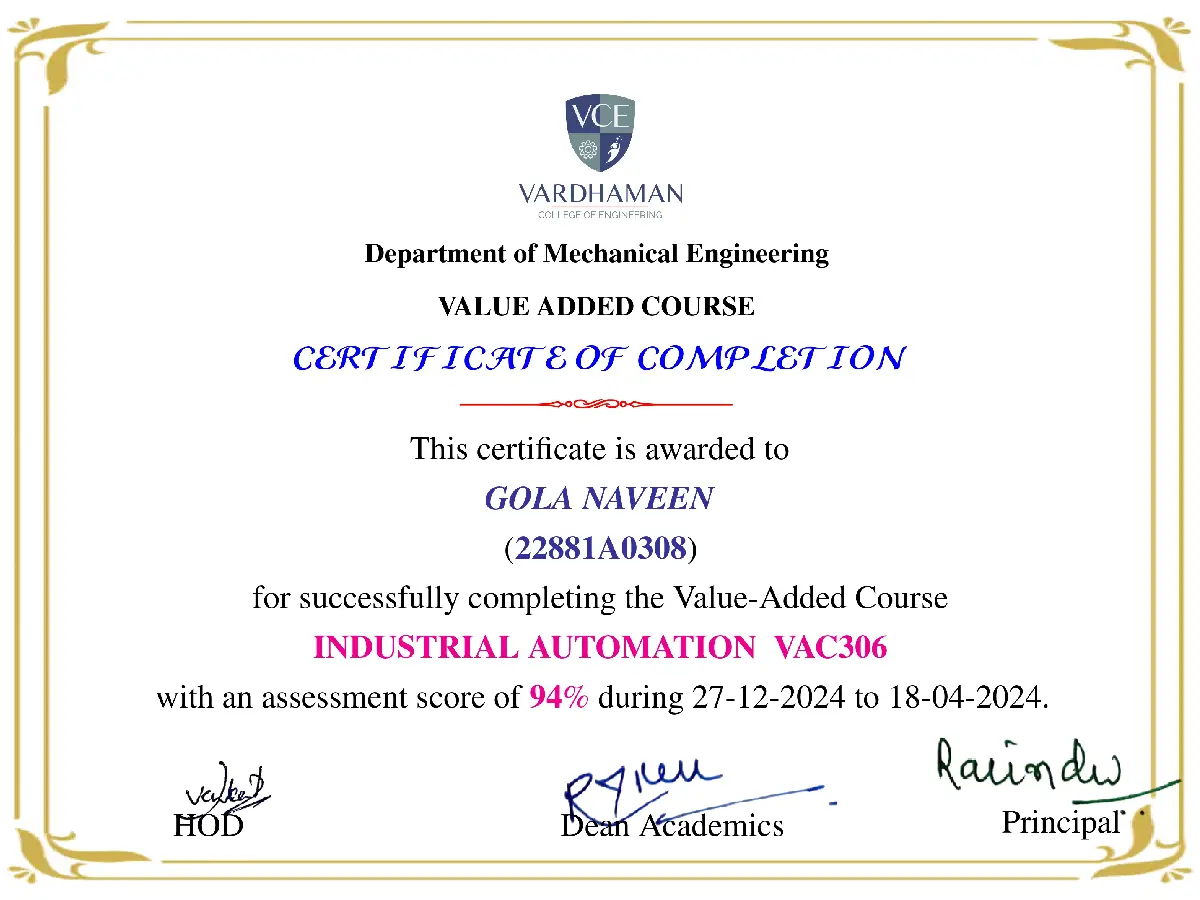
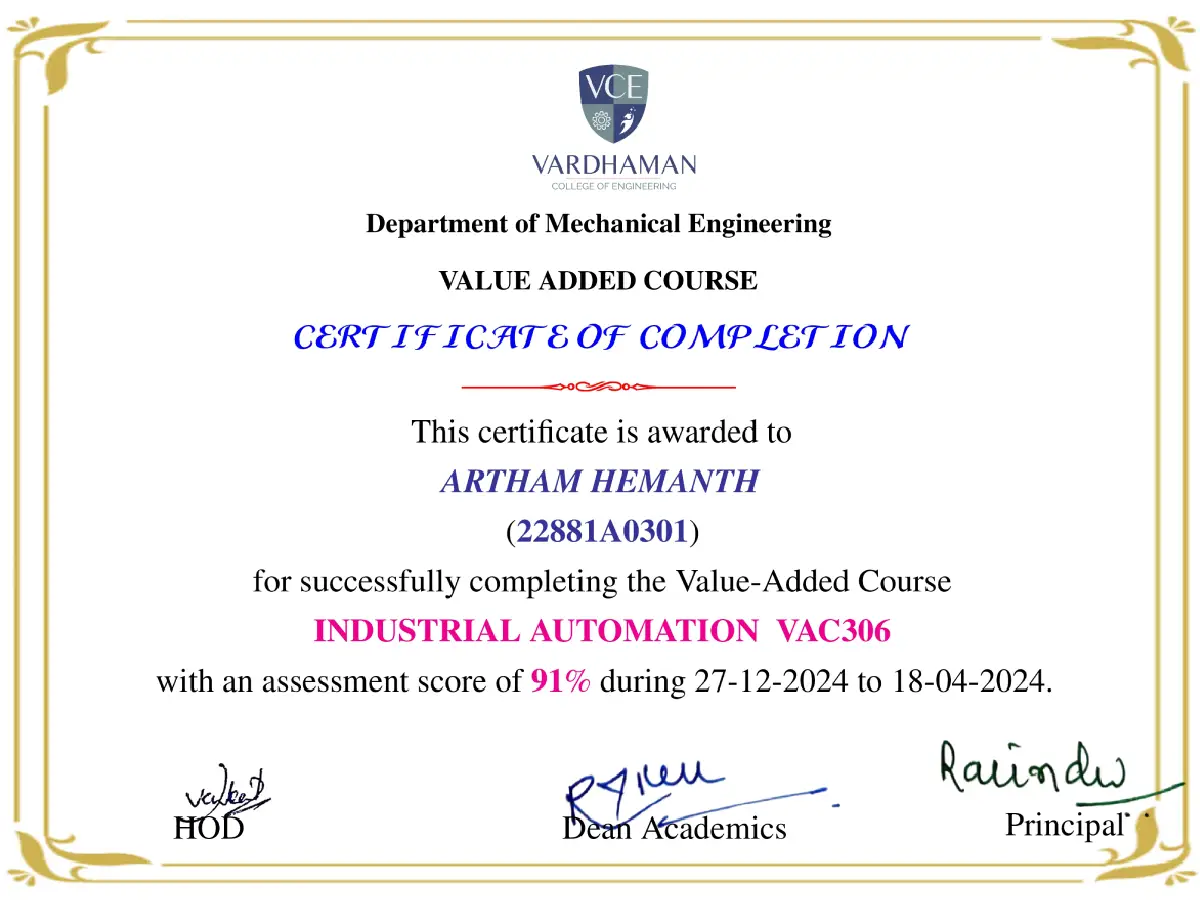
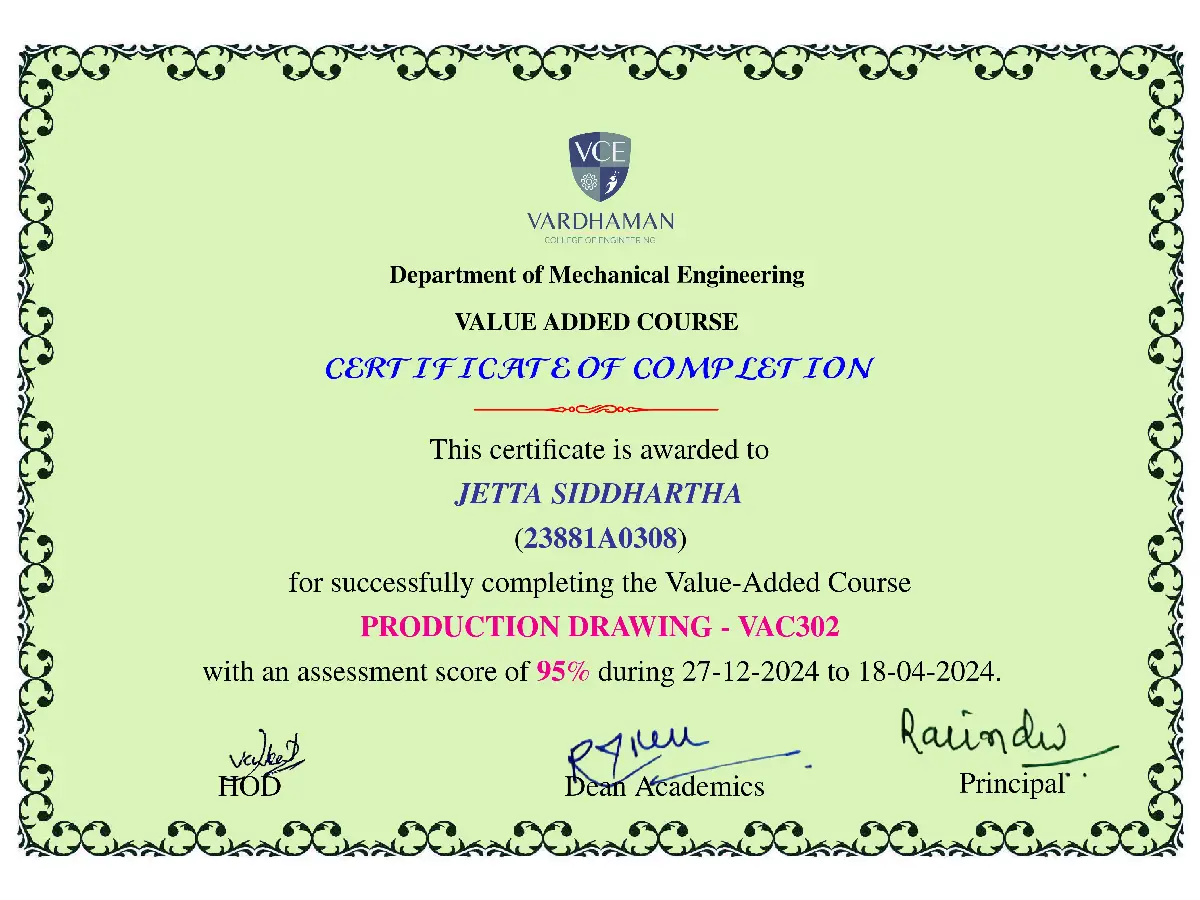
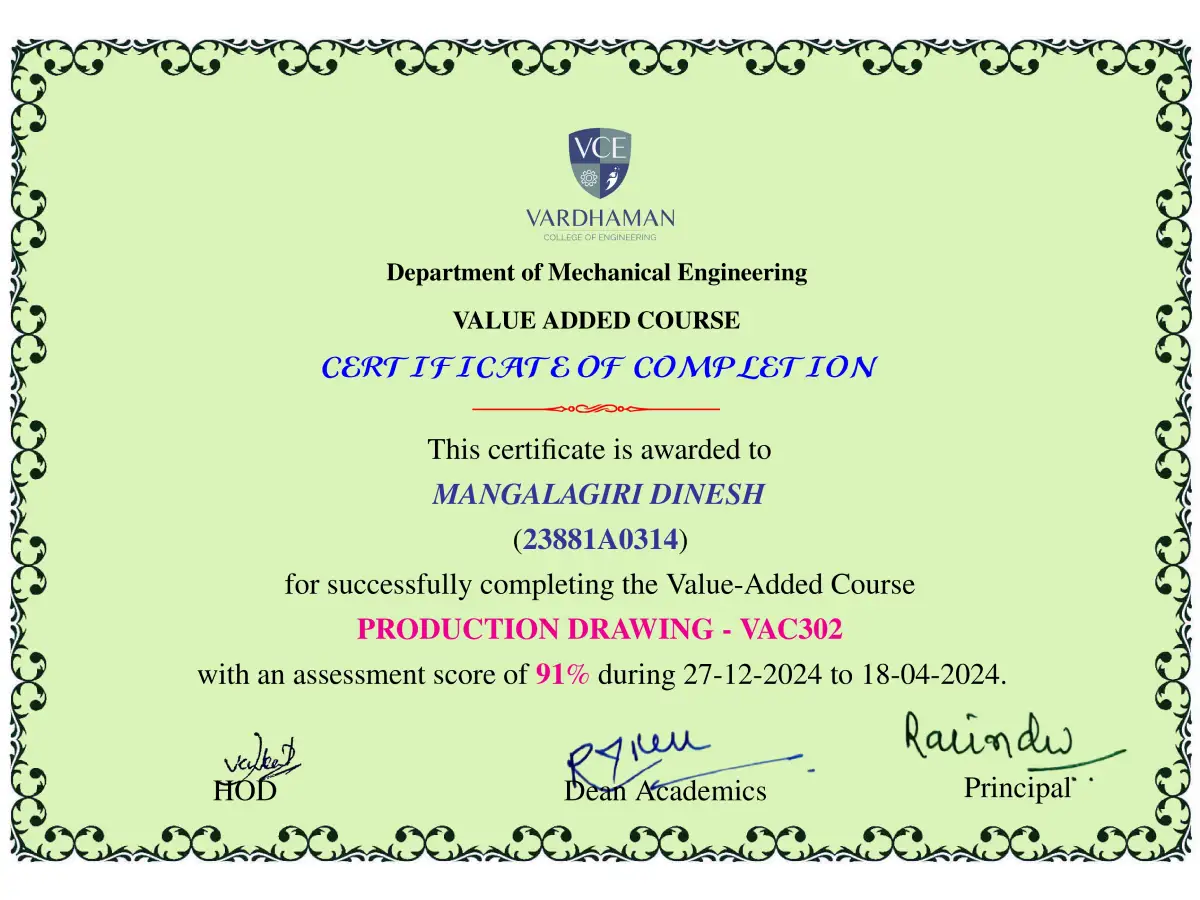
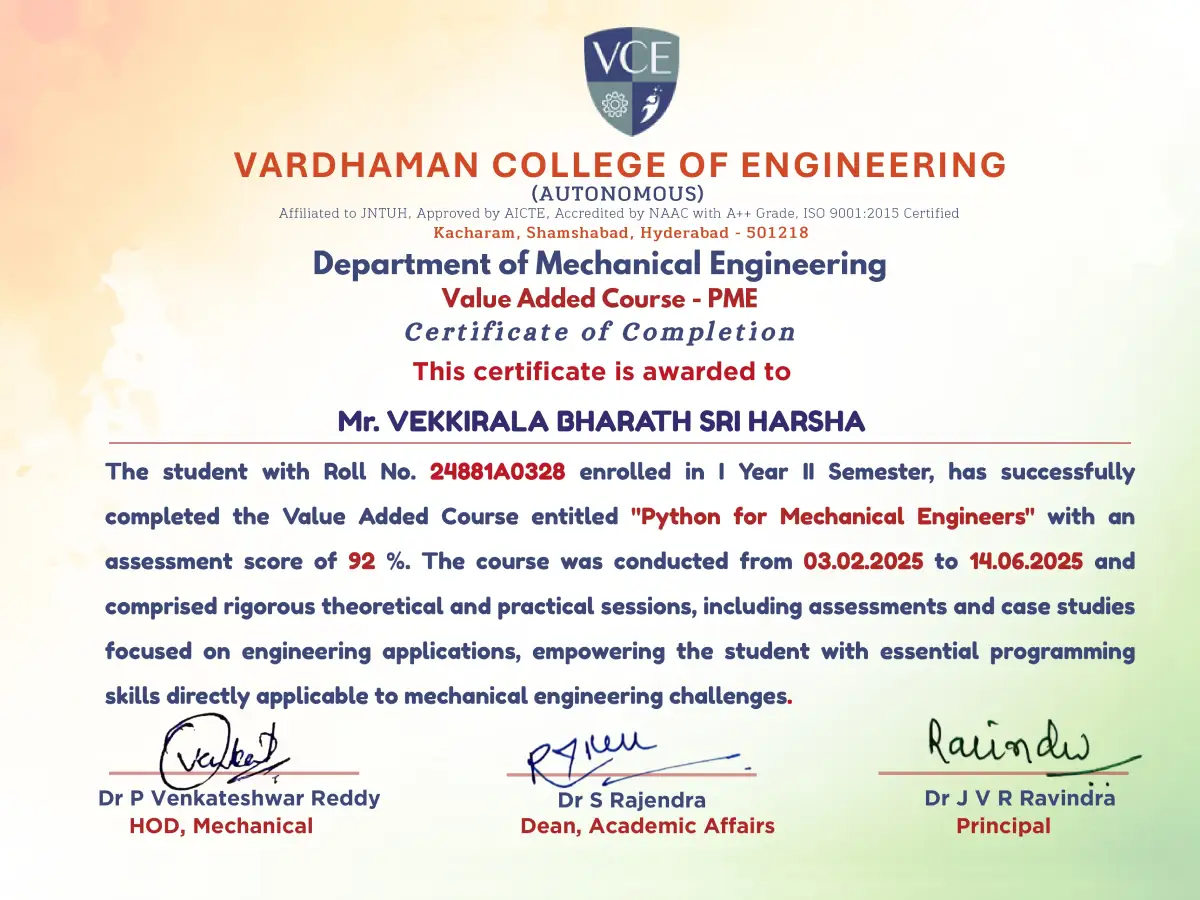
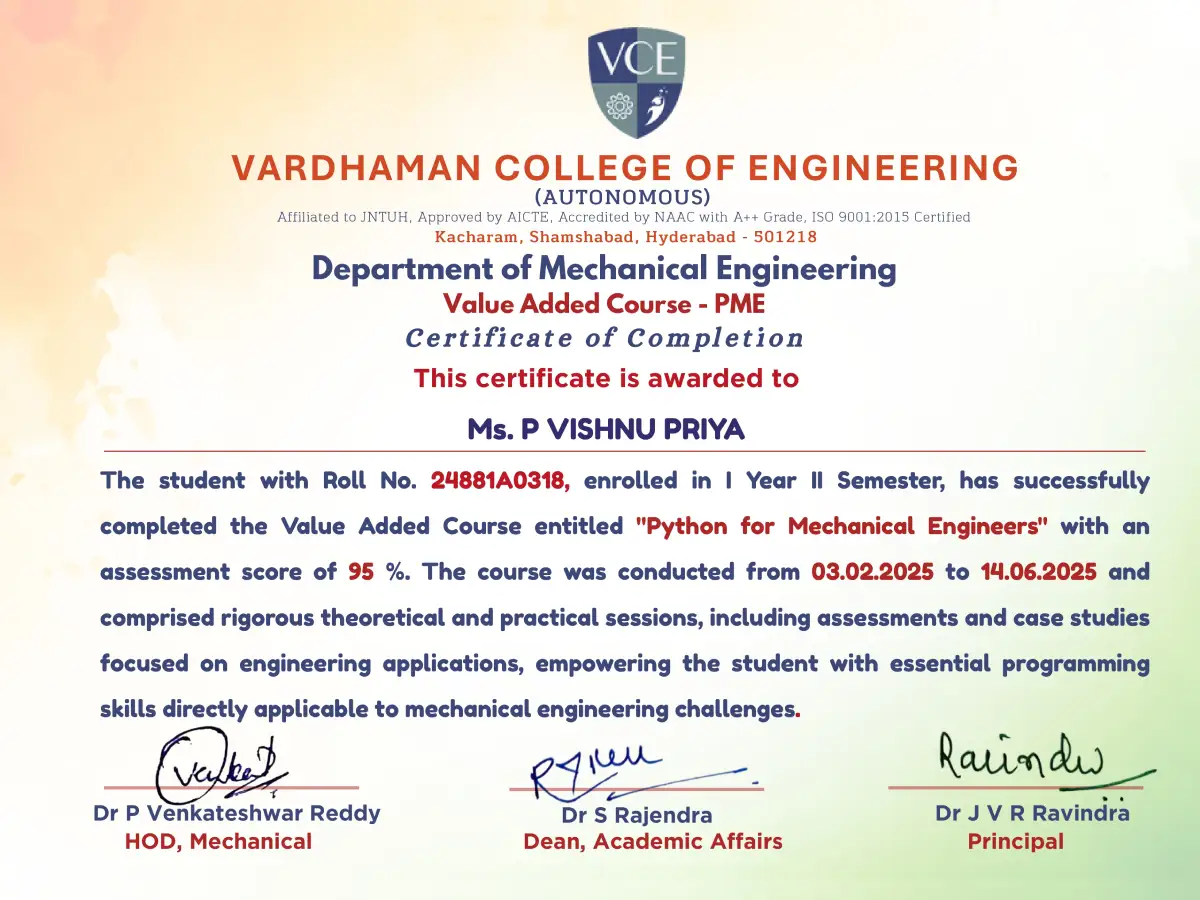
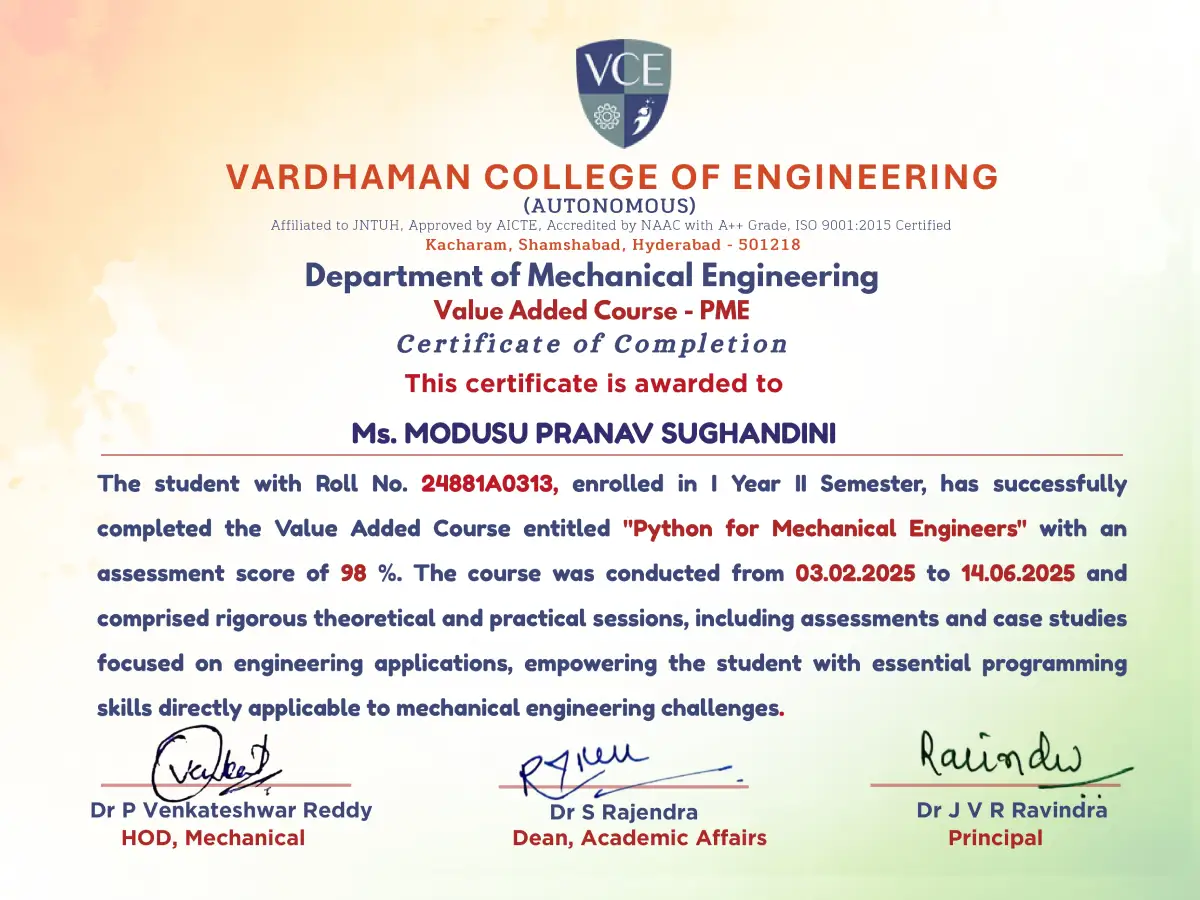
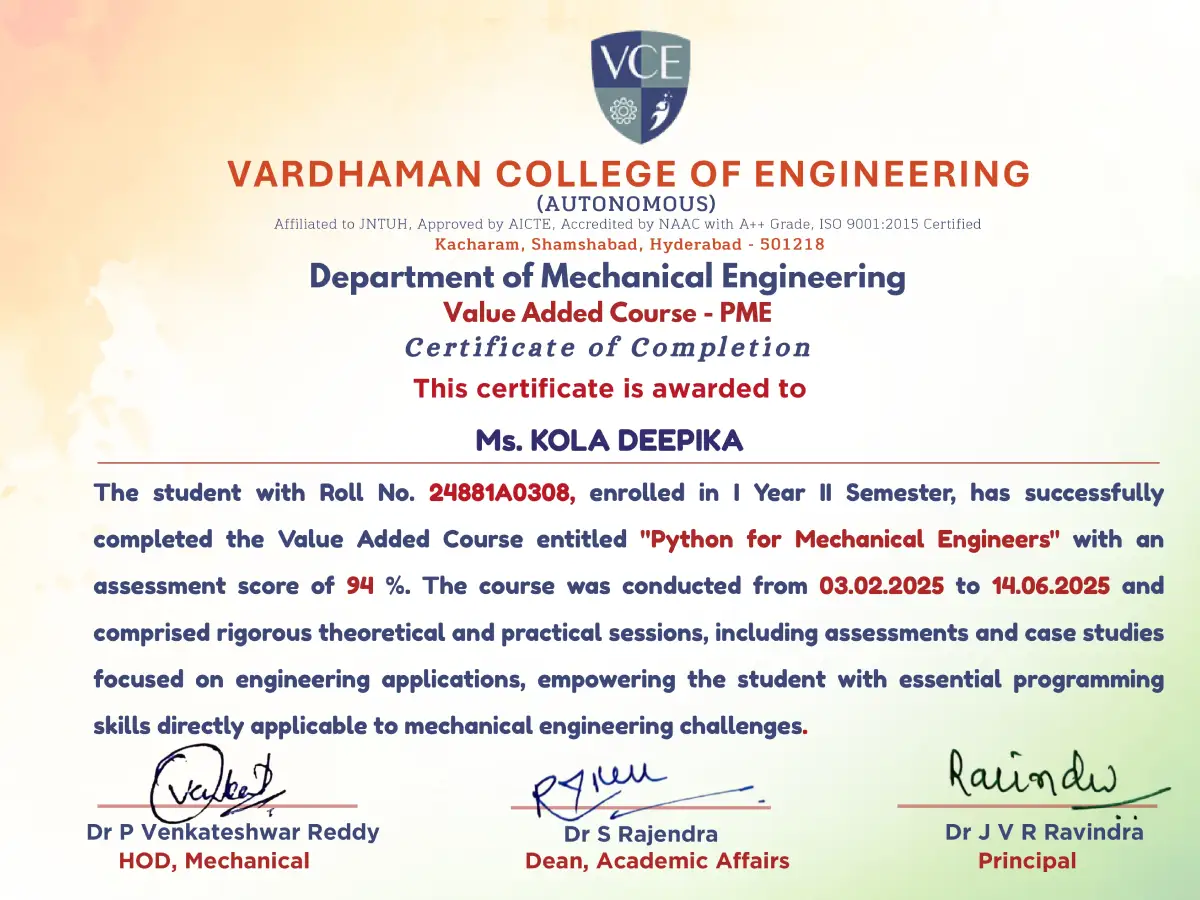
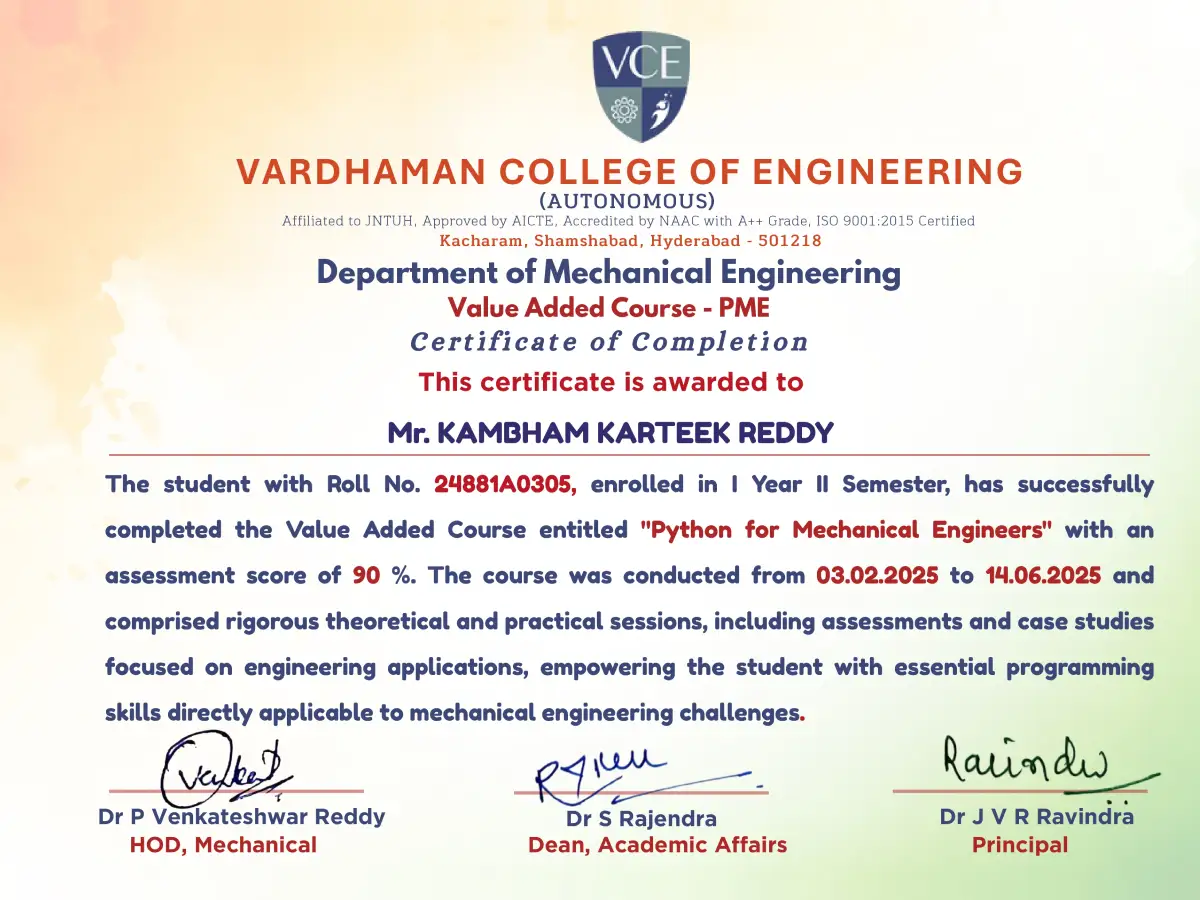
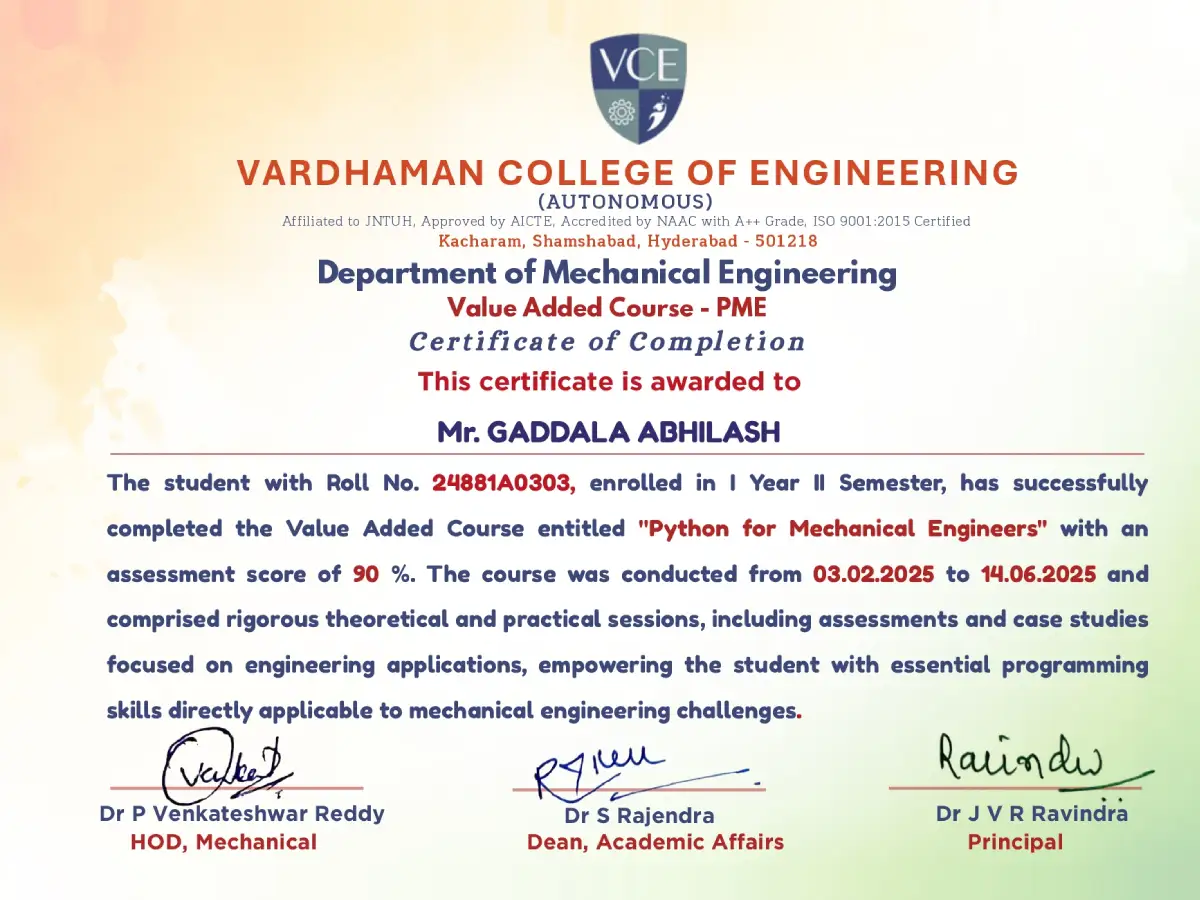
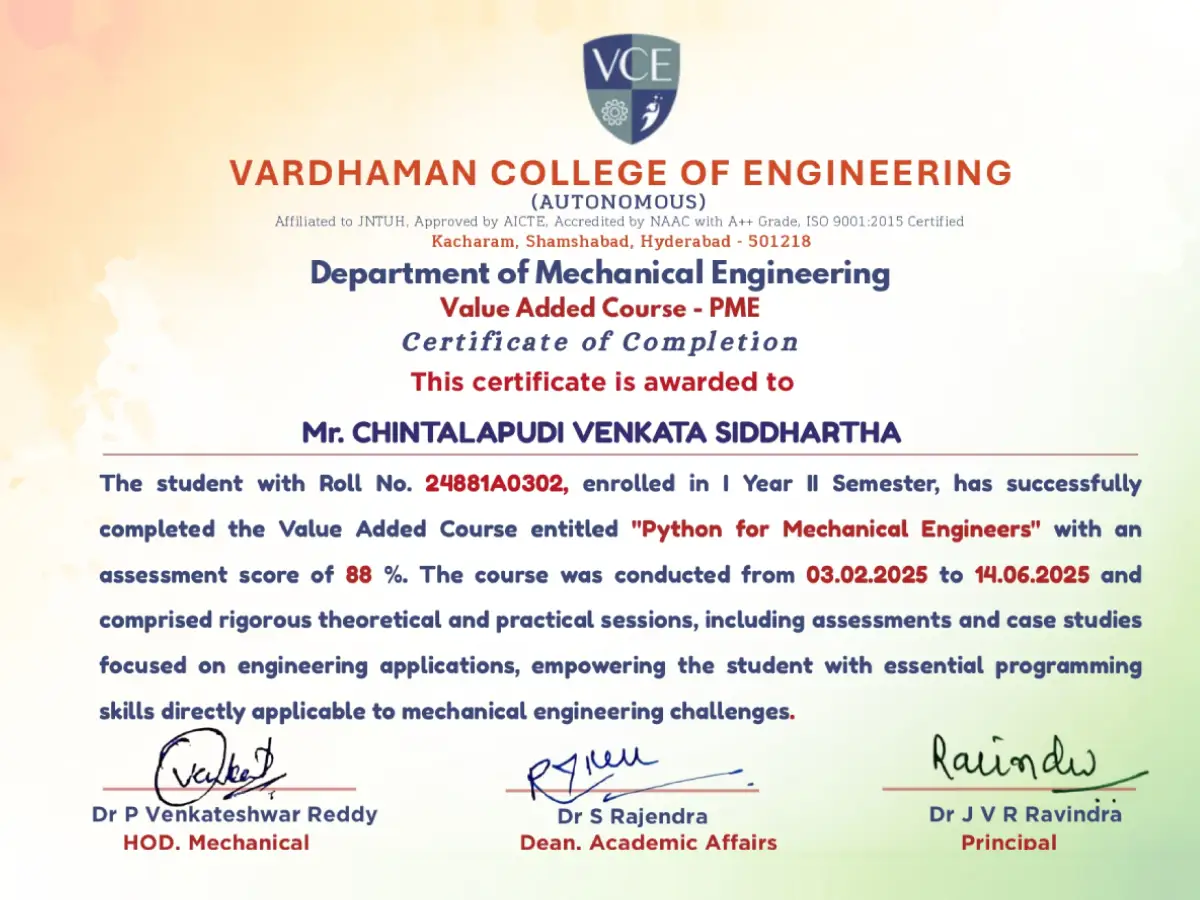
The Department of Mechanical Engineering offers value added courses beyond the regular curriculum to strengthen industry-oriented skills, practical knowledge, and employability. These courses optimally utilize laboratories, workshops, and advanced fabrication facilities to deliver application-driven training. Emphasis is placed on hands-on practice, modern engineering tools, and real-world problem solving, enabling students to bridge the gap between theoretical concepts and industrial requirements while enhancing professional readiness.
The Department of Mechanical Engineering actively promotes participation in SWAYAM and other Massive Open Online Courses to complement classroom instruction and encourage self-directed, lifelong learning. These platforms enable students and faculty to gain exposure to advanced mechanical engineering concepts, emerging technologies, and interdisciplinary domains through high-quality content delivered by reputed institutions and industry experts. The flexibility of online learning enhances knowledge depth, technical competence, and continuous professional growth beyond the prescribed curriculum.
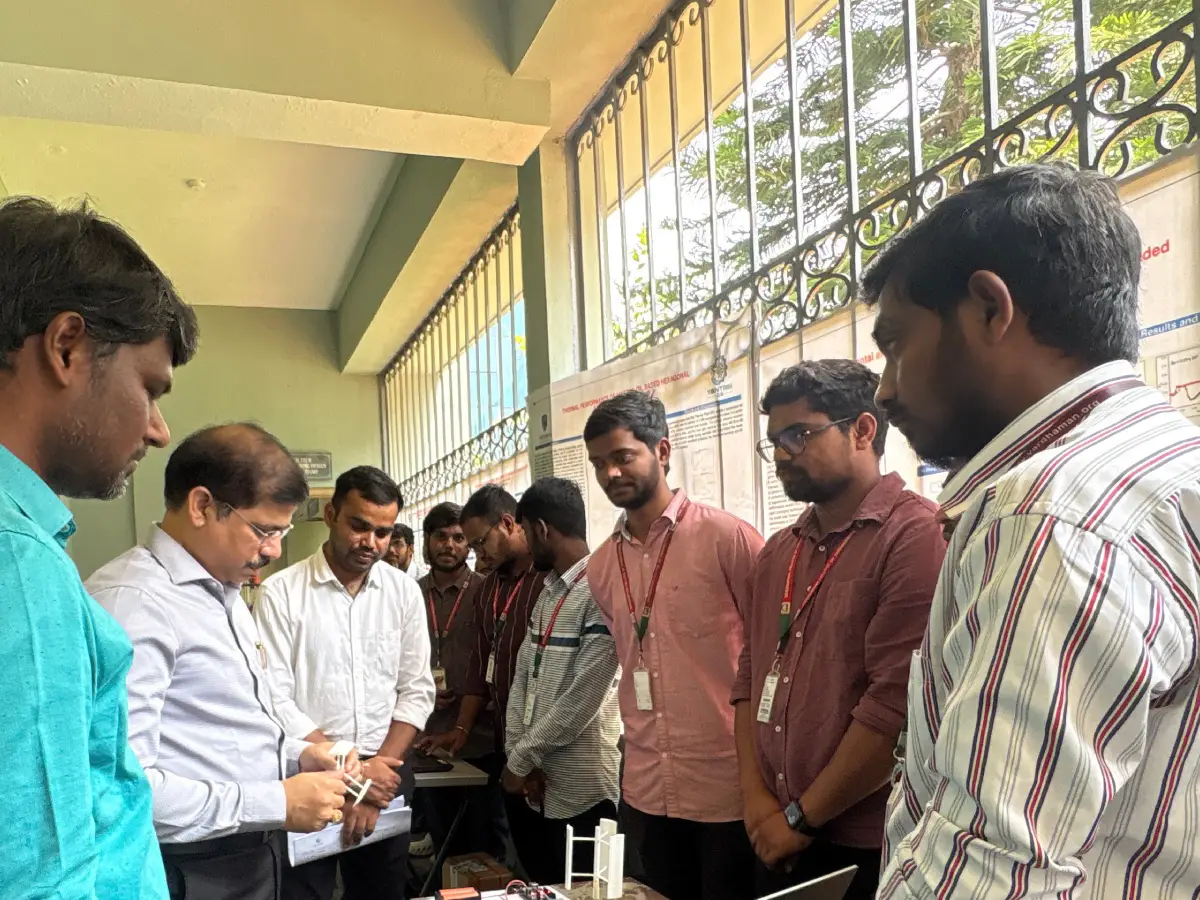
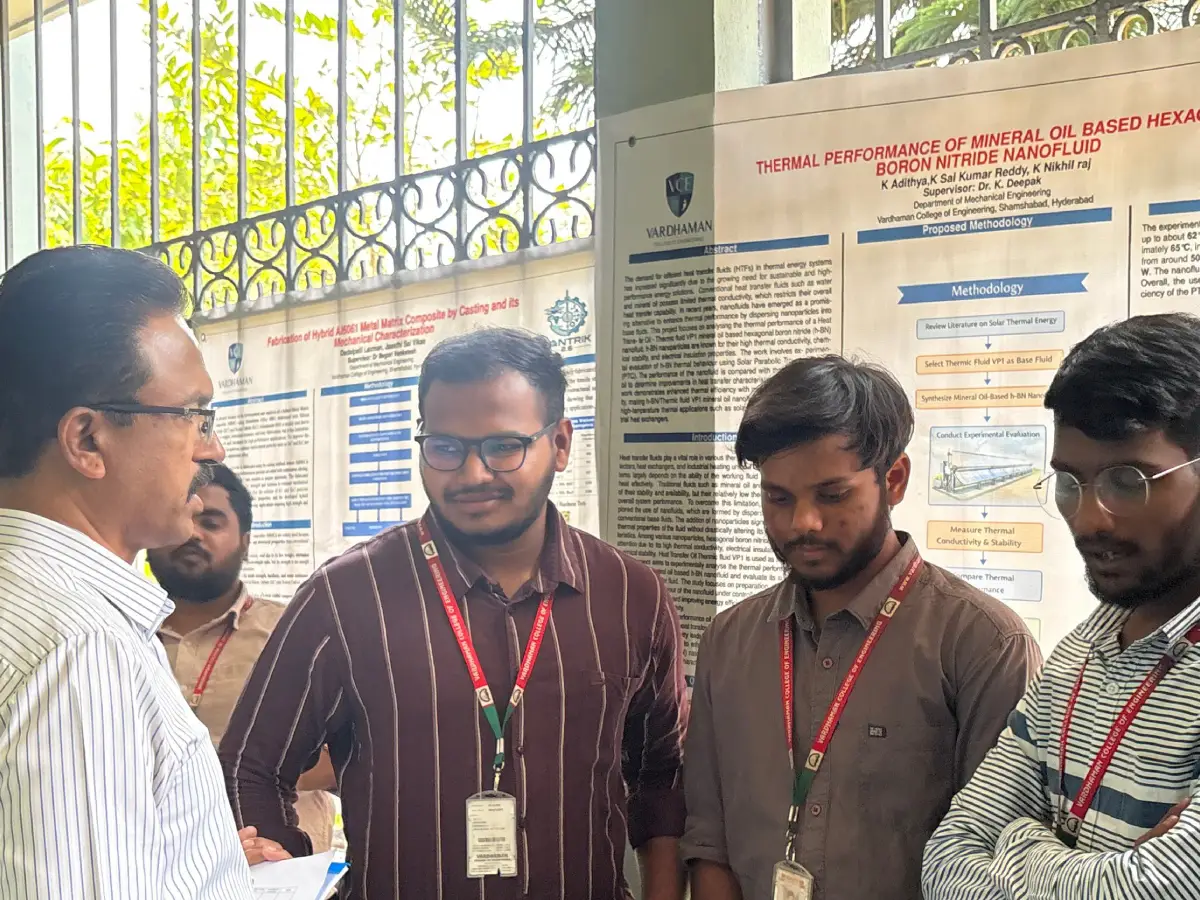
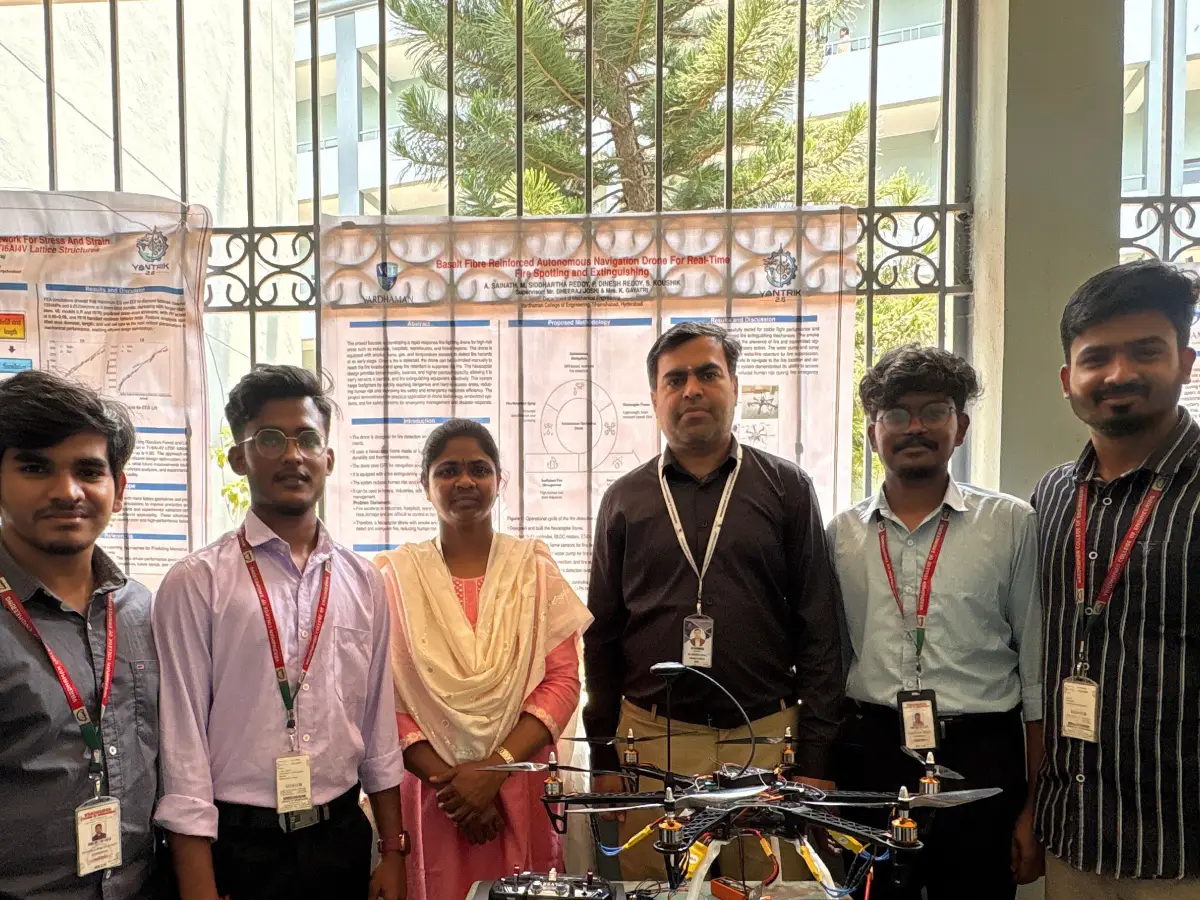
The Department of Mechanical Engineering considers academic projects as a vital component of experiential learning and professional skill development. Students undertake structured project work at different stages of the program to apply engineering principles to real-world mechanical systems and challenges. These projects strengthen design thinking, analytical ability, fabrication skills, teamwork, and innovation while aligning technical knowledge with industrial practices and societal requirements.
The Department of Mechanical Engineering adopts an Outcome Based Education (OBE) framework that focuses on achieving clearly defined learning outcomes in terms of knowledge, skills, and professional competencies. The curriculum, teaching methodologies, and assessment strategies are systematically aligned to ensure that students attain measurable Program Outcomes (POs), Program Specific Outcomes (PSOs), and Course Outcomes (COs). This structured approach enhances technical proficiency, problem-solving ability, and industry readiness while promoting continuous improvement in the teaching–learning process.
Engineering Graduates will be able to: